Author: Miracle Olughu

  • Australian Girls Influenced To Commit Acts Of Violence By Online Crime Gangs

    Australian Girls Influenced To Commit Acts Of Violence By Online Crime Gangs

    Australian Girls Influenced To Commit Acts Of Violence By Online Crime Gangs

    Australian girls are being coerced into acts of violence – against themselves, their siblings or pets by online crime networks in a twisted type of gamification, according to the police. 

    “New and distributing front traditional gender-based violence”, Australian Federal Police (AFP) Commissioner Krissy Barrett said in a speech on Wednesday, as they set up a new taskforce to help tackle this global issue. 

    In Australia, three people have been arrested and a total of nine people around the world who have similar cases.

    According to Ms Barrett, the alleged perpetrators held violent extremist views and wanted to hurt people “for fun”.  

    These online crime influencers target youth between their early 20s and early 30s with low self-esteem, from Western backgrounds, through gaming platforms like Roblox or messaging apps like Discord and Telegram. 

    The boys and men, whom Ms Barrett calls “crimefluencers”, subscribe to a variety of ideologies – including nihilism, sadism, Nazism and satanism – and they target girls with low self-esteem and mental health disorders.

    “These groups have a similar culture to multiplayer, online gaming culture, and hunt, stalk and draw in victims from a range of online platforms,” she said, adding that they may not fully understand the consequences of their behaviour.

    “The motivation of individuals within these networks is not financial nor is it for sexual gratification – this is purely for their amusement, for fun, or to be popular online.”

    According to Ms Barret, almost 60 alleged offenders had been identified in Australia alone, and the AFP was working with other Five Eyes nations – the US, UK, New Zealand and Canada – to target the groups.

    Tech companies are also helping police develop an AI tool which will help detect emojis and slang used as code when discussing sadistic online exploitation in encrypted communications.

    Ms Barrett’s speech comes as Australia prepares to introduce a world-first social media ban for kids under 16, aimed at minimising online harm. However gaming and messaging platforms are exempt from the new laws, which come into effect in December.
  • Israeli Strike Kills 33 People In Gaza

    Israeli Strike Kills 33 People In Gaza

    Israeli Strike Kills 33 People In Gaza

    At least 33 Palestinians were killed in a wave of Israeli strikes in Gaza on Tuesday night, the Hamas-run Civil Defence agency and hospitals say.

    Israel launched the strikes in reaction to what it claimed were Hamas’s breaches of the cease-fire agreement mediated by the United States.

    Israel’s defence minister accused Hamas of violating the agreement to release the corpses of dead captives and of carrying out an offensive in southern Gaza on Tuesday that resulted in the death of an Israeli soldier. Hamas maintained its commitment to the ceasefire agreement and asserted that it had “no connection” to the strike.

    Israel could “hit back” when its soldiers are targeted, according to US President Donald Trump, who insisted that “nothing” would jeopardise the ceasefire.

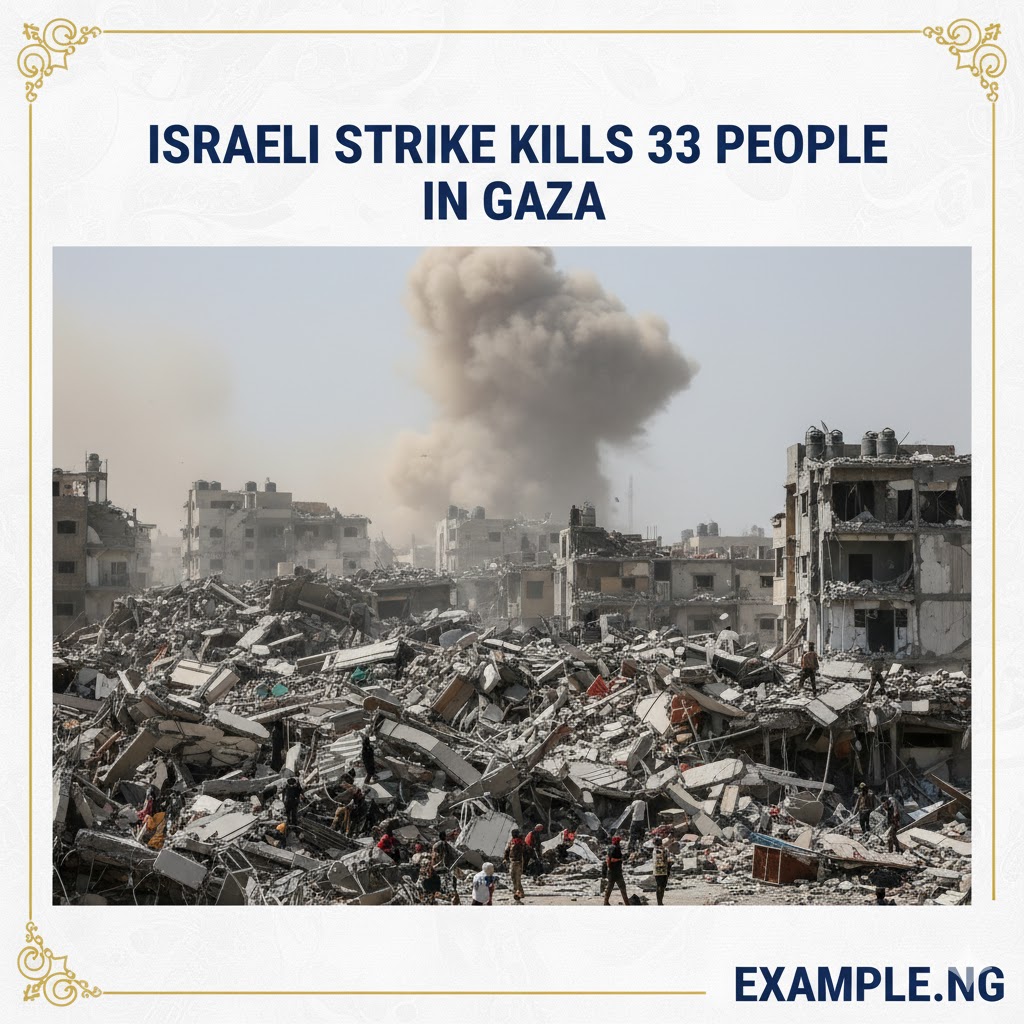
    According to first responders and witnesses, the Israeli strikes targeted homes, schools, and residential blocks in Khan Younis in the south, Bureij and Nuseirat in the centre, and Gaza City and Beit Lahia in the north.

    As explosions rocked several residential locations in Gaza City, witnesses reported seeing “pillars of fire and smoke” soaring into the sky.

    Fourteen people were murdered throughout the city, including three ladies and a man who were rescued from the debris of the al-Banna family’s house in the southern Sabra neighbourhood, a Civil Defence spokesman told the BBC early on Wednesday.

    In the urban Bureij refugee camp, five members of the Abu Sharar family were killed in a strike on their home in the Block 7 area, he said.

    Additionally, he stated that five more persons were killed in Khan Younis after an aircraft struck a car on a route northwest of the city.

    The Civil Defence spokesperson stated that the rescue crews were “working amid extremely difficult conditions” and expressed concern that the death toll may increase due to the possibility that other missing persons were buried beneath debris.

    Israeli Prime Minister Benjamin Netanyahu’s office released a brief statement on Tuesday night stating that he had given the order for the military to conduct “forceful strikes” in Gaza, but it did not explain why.

    His defence minister, meanwhile, claimed that Hamas had crossed “a bright red line” on Tuesday when it attacked Israeli forces in Gaza.

    “Hamas will pay many times over for attacking the soldiers and for violating the agreement to return the fallen hostages,” Katz warned.

    An Israeli military official said the attack took place “east of the Yellow Line”, which demarcates Israeli-controlled territory inside Gaza under the ceasefire deal.

    The Israeli military declared the death of Master Sergeant Yona Efraim Feldbaum, a reservist soldier, early on Wednesday.

    He was a member of a military engineering team operating in the southern city of Rafah when it was ambushed, according to Israeli media.

    According to reports, gunmen fired rocket-propelled grenades at the soldiers after emerging from an underground tunnel system.

    In a statement, Hamas condemned the Israeli attacks and denied that its fighters had attacked Israeli troops.

    “Hamas affirms that it has no connection to the shooting incident in Rafah and affirms its commitment to the ceasefire agreement,” it said.

    “The criminal bombardment carried out by the fascist occupation [Israeli] army on areas of the Gaza Strip represents a blatant violation of the ceasefire agreement.”

    In the meantime, the group’s military branch declared that Israeli “violations” would cause it to delay returning a hostage’s body that it had found on Tuesday.

    The US downplayed concerns that full-scale fighting would resume.

    “As far as I can tell, they killed an Israeli soldier,” President Trump said to reporters aboard Air Force One. Thus, the Israelis retaliated, and they ought to do so.

    “Nothing is going to jeopardise the ceasefire, he said. “You have to understand Hamas is a very small part of peace in the Middle East, and they have to behave.”

    Vice-President JD Vance earlier said that the ceasefire was “holding” despite what he described as “little skirmishes” between the two sides.

    After Hamas turned over a coffin containing human remains that did not belong to one of the 13 dead hostages who had been held in Gaza the day before, Israel’s prime minister promised on Tuesday afternoon to take vague “steps” against the organisation.

  • Tourist Plane Crash In Kenya Kills 11 Persons

    Tourist Plane Crash In Kenya Kills 11 Persons

    Tourist Plane Crash In Kenya Kills 11 Persons

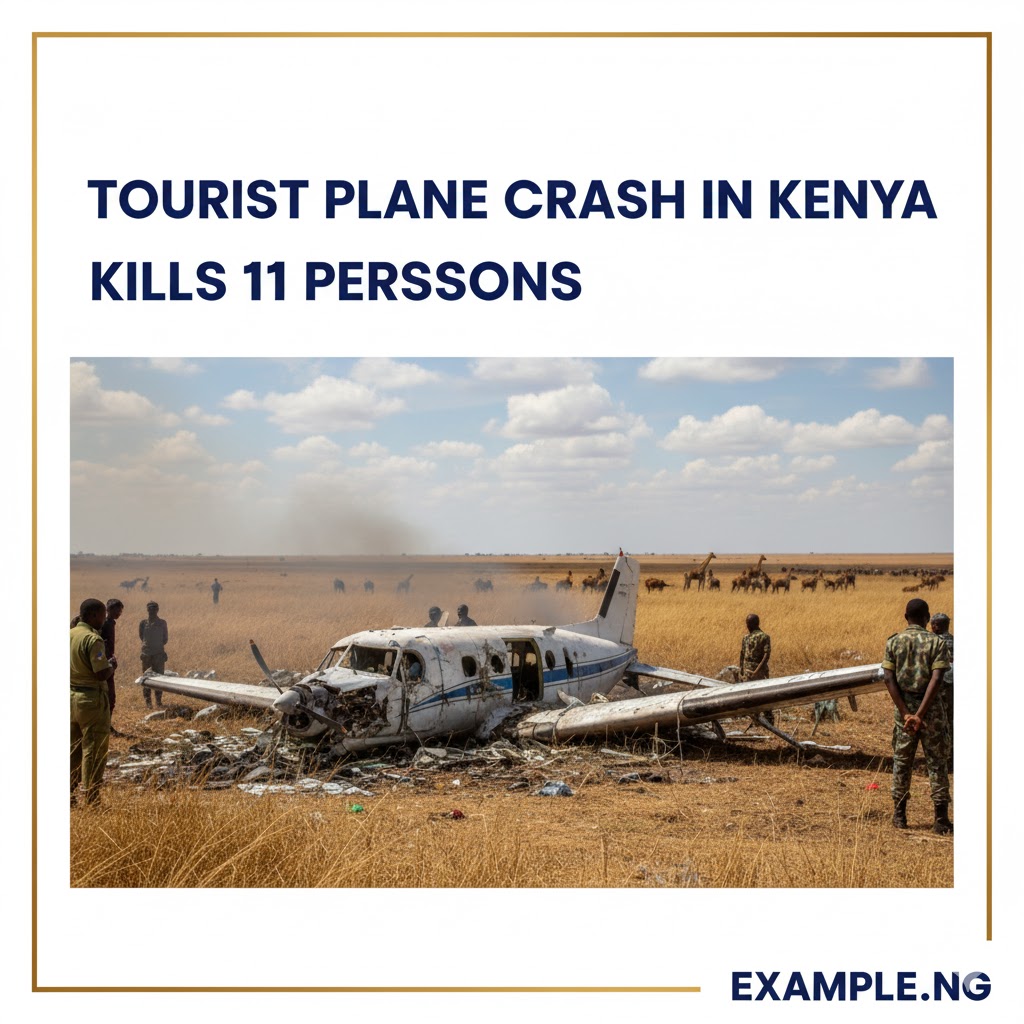
    Ten European tourists and a local pilot were killed in a plane crash near Kenya’s coast, according to officials.

    According to the Kenya Civil Aviation Authority (KCAA), the plane crashed around 5:30 local time (02:30 GMT) while travelling from the well-known beach resort of Diani to an airstrip in the renowned Maasai Mara game area.

    Eight Hungarians, two Germans, and a Kenyan pilot were all killed in the disaster, according to Mombasa Air Safari.

    “Our primary focus right now is on providing all possible support to the families affected,” it added in a statement.

    Images of the plane in flames with debris strewn at the accident site have been released by local media.

    The plane crashed approximately 10 kilometres (six miles) from Kwale town after taking off from Diani, the Kwale County Commissioner, Stephen Orinde, told the BBC.

    It was en route to Kichwa Tembo, a Maasai Mara airstrip that attracts tourists due of its animals.

    “The passengers were all tourists,” Orinde said.

    He stated that the crash’s cause was still under investigation, though he speculated that inclement weather might have played a role.

    “At the moment, the weather is not great here. We are unable to avoid [the findings] because it is raining and quite hazy since early in the morning,” Orinde stated.

    In August, a light aircraft belonging to the medical charity Amref crashed on the outskirts of the capital, Nairobi, killing six people and injuring two others.

  • Jihadist Blockade Causes Schools And Universities To Shut Down In Mali As Fuel Crisis Worsens

    Jihadist Blockade Causes Schools And Universities To Shut Down In Mali As Fuel Crisis Worsens

    Due to a severe fuel shortage caused by an Islamist insurgent blockade of fuel supplies, Mali has closed schools and universities across the country.

    On state television, Education Minister Amadou Sy Savane announced that all educational institutions will remain closed until November 9th, citing the impact of the blockade on staff and student mobility.

    According to him, the authorities are “doing everything possible” to resolve the situation so that courses can resume on November 10.

    After terrorists from an al-Qaeda offshoot enforced a blockade by targeting tankers on major routes, Mali has been experiencing a fuel shortage for weeks, particularly in the capital city of Bamako.

    Due to Mali’s landlocked status, all fuel is transported by road from neighbouring countries such as Senegal and the Ivory Coast.

    In recent weeks, Bamako’s normally busy streets have reportedly grown quieter, and long lines have formed at gas stations.

    The situation has persisted despite the military government’s earlier assurances this month that it would be a short-term problem.

    In light of the escalating fuel crisis and mounting security concerns, the US Embassy in Bamako announced last week that non-essential diplomatic personnel and their families will depart Mali.

    It said the fuel disruptions had affected electricity supply and had the “potential to disrupt the overall security situation in unpredictable ways”.

    A military junta led by Gen. Assimi Goïta, who took power in a 2021 coup, presently rules Mali.

    When the junta came to power, the people supported it because it promised to address the long-standing security issue brought on by an ethnic Tuareg separatist uprising in the north that was later taken over by Islamist terrorists.

    In 2013, French troops and the UN peacekeeping force were sent in to combat the growing rebellion.

    Since the junta assumed power, both have departed, and to address the unrest, the military government has employed Russian mercenaries.

    Nonetheless, a significant portion of the country’s north and east is still uncontrolled by the government due to the ongoing terrorist insurgency.

  • Ukrainian Drone Attack Hits Russia’s Belgorod And Causes Blackout 

    Ukrainian Drone Attack Hits Russia’s Belgorod And Causes Blackout 

    Ukrainian Drone Attack Hits Russia’s Belgorod And Causes Blackout 

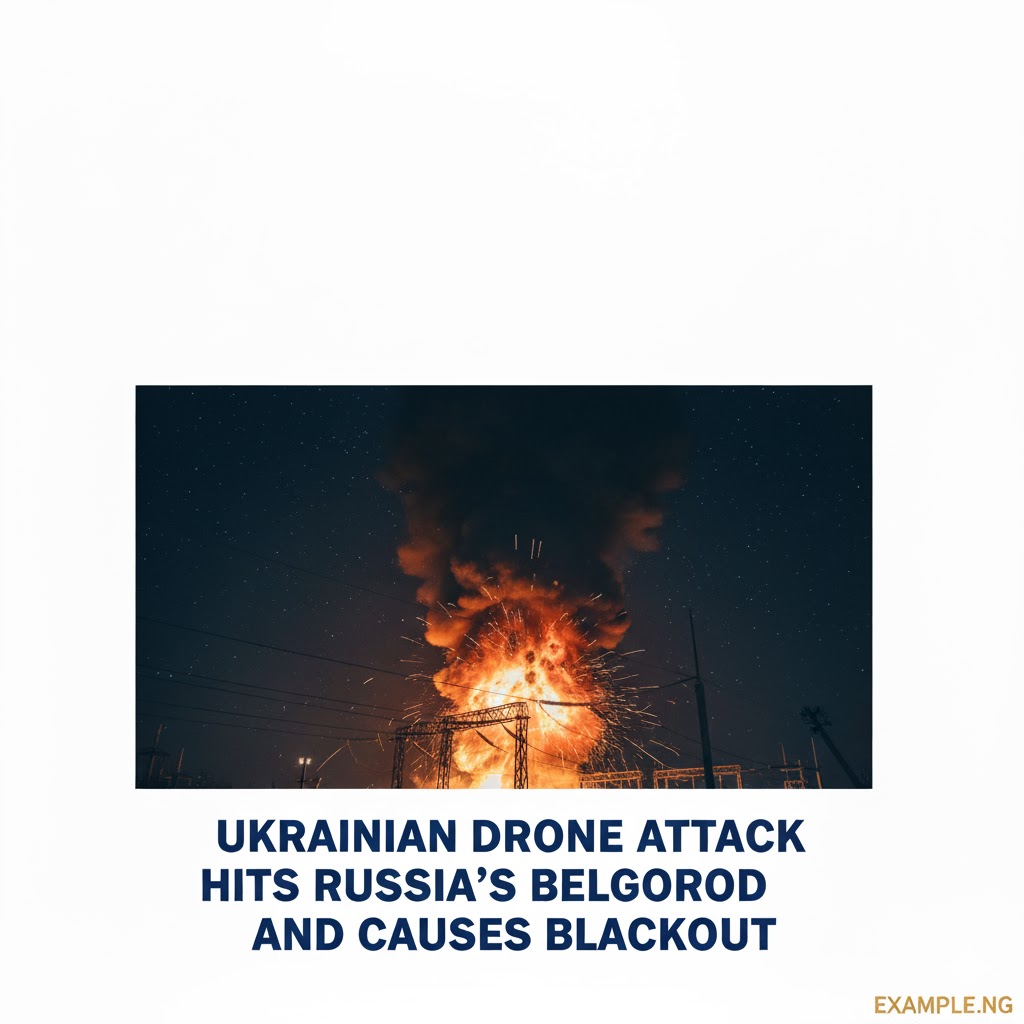
    Residents of Russia’s Belgorod region report that as Kyiv retaliates with cross-border strikes of its own in response to repeated bombardments of its cities, blackouts, air-raid sirens, and the sound of gunfire directed at incoming Ukrainian drones are becoming more frequent.

    “It’s so loud and so terrifying,” says Nina, a Belgorod resident who asked us to change her name.

    “I was coming back from the clinic when a siren went off. As usual, I received Telegram alerts about a drone attack. Then bursts of automatic gunfire broke out, I ran into a nearby courtyard and tried to hide under an arch,” she recalls.

    “The next day it all happened again – air defence fire, automatic gunfire, explosions.”

    A BBC News Russian investigation based on data from local authorities shows that since the beginning of 2025, the number of Ukrainian drone assaults on the Belgorod region has roughly quadrupled.

    The number of Ukrainian drones in the Belgorod region increased from about 1,100 in January 2025 to over 4,000 in September. The governor claims that more than 260 drones struck the area in one of the largest attacks last month. Additionally, since the summer, the number of missile assaults has increased.

    Russia’s almost daily missile and drone attacks, which frequently murder civilians and leave cities all around the nation without heat or electricity, continue to cause significantly higher costs for Ukraine.

    Russian attacks on Ukrainian cities overnight into Wednesday killed at least seven people, including two children, and there are concerns that this winter could be the worst yet for Ukraine.

    Russia’s latest assault on Ukraine’s energy infrastructure is directly responsible for the recent spike in attacks on Belgorod, some of which have resulted in massive blackouts, according to Ukrainian authorities.

    “Maybe they should stop being too comfortable there in Belgorod?” According to Zelensky earlier this month. “They must understand: if they want to leave us without power, then we will do the same”.

    The Belgorod region is a crucial staging area and supply route for Russian forces close to the Ukrainian border. Additionally, it is frequently the starting point for short-range drone and artillery attacks.

    While smaller towns in the area had localised power outages earlier in the conflict, Belgorod remained relatively untouched until this fall.

    According to Ukrainian officials, Russia’s most recent assault on Ukraine’s energy infrastructure is directly to blame for the current spike in strikes on Belgorod, some of which have resulted in massive blackouts.

    “Maybe they should stop being too comfortable there in Belgorod?” stated earlier this month by Zelensky. “They must understand: if they want to leave us without power, then we will do the same”.

    Near the Ukrainian border, the Belgorod region serves as a crucial staging area and supply route for Russian soldiers. Additionally, artillery and short-range drone strikes frequently originate from it.

    Earlier in the conflict, smaller towns in the area experienced localised power outages, but until this autumn, Belgorod remained mostly untouched.

  • US kills Three In The Pacific In Second Strike On Alleged Drug Boat

    US kills Three In The Pacific In Second Strike On Alleged Drug Boat

    US kills Three In The Pacific In Second Strike On Alleged Drug Boat

    US forces have struck a second vessel alleged to be carrying drugs in the Pacific Ocean, amid an escalating US campaign against seaborne drug smuggling.

    Three people were killed and no US forces were harmed in the strike on Wednesday, Defence Secretary Pete Hegseth said. It comes a day after the US struck another boat in the Pacific, killing two people.

    Both vessels were believed to be carrying drugs along known trafficking routes in international waters, Hegseth added.

    The strikes are the eighth and ninth against suspected drug boats since 2 September – but the first in waters of the Pacific Ocean. Most US strikes have been in the Caribbean Sea.

    “Today, at the direction of President Trump, the Department of War carried out yet another lethal kinetic strike on a vessel operated by a Designated Terrorist Organization,” Hegseth posted on X.

    “These strikes will continue, day after day. These are not simply drug runners—these are narco-terrorists bringing death and destruction to our cities,” Hegseth continued.

    The post was accompanied by a video that appears to show a boat catching fire after being struck by a US bomb.

    Floating items are then seen in the water, before they appear to be targeted by a second airstrike.

    US President Donald Trump said he has the legal authority to continue bombing boats in international waters, but said he may go to the US Congress if he decides to expand targets to land.

    “We’re allowed to do that, and if we do (it) by land, we may go back to Congress,” Trump said to reporters in the Oval Office on Wednesday.

    He claimed that his administration was “totally prepared” to significantly up the anti-drug operations by extending them on land.

    The United States has struck suspected drug vessels, including a semi-submersible ship in the Caribbean, killing at least 37 people.

    After surviving a strike last week, two guys were sent back to Ecuador and Colombia.

    One guy, named as Andrés Fernando Tufiño, was later freed by Ecuador’s government, which claimed there was no proof of misconduct. According to reports, the other Colombian man is still in the hospital.

    News of the strike comes as tensions rise between the Trump administration and the Colombian government of President Gustavo Petro, whom Trump has characterised as “a thug and a bad guy”.

    “He better watch it or we’ll take very serious action against him and his country,” Trump said. “He has led his country into a death trap.”

    The great bulk of cocaine headed for US cities travels through the Pacific, according to US estimates from the Drug Enforcement Agency, or DEA.

    Although US authorities have warned that the number is increasing, drug seizures in the Caribbean, where the majority of reported US strikes have occurred thus far, make up a comparatively small portion of the total.

    The identities of those killed in the strikes and the drug trafficking organizations they are alleged to have belonged to have not been disclosed by US officials to date.

    As part of the mission, dozens of military ships and planes have been sent to the Caribbean, along with about 10,000 US personnel.

  • Eight New Countries Added To Methanol Poisoning Warning List

    Eight New Countries Added To Methanol Poisoning Warning List

    Eight New Countries Added To Methanol Poisoning Warning List

    The UK Foreign Office has added eight nations to its list of nations that are at danger of methanol poisoning due to contaminated or fake alcoholic beverages.

    The revised travel advice now includes Ecuador, Japan, Kenya, Mexico, Nigeria, Peru, Russia, and Uganda in light of occurrences involving Britons in those nations.

    In the wake of many high-profile instances, including the killing of six tourists in Laos last year, the caution was previously issued for Thailand, Laos and Vietnam, Cambodia, Indonesia, Turkey, Costa Rica, and Fiji.

    Because methanol poisoning can cause severe illness and even death, travelers are warned to be on the lookout for symptoms including confusion and blurred vision.

    Windscreen washer fluid and antifreeze include the industrial ingredient methanol. It is extremely poisonous and not intended for human consumption.

    However, there have been cases of dishonest home brewers adding methanol to drinks to extend their shelf life, and some restaurants and street vendors combining it with cocktails and spirit-based drinks to save money.

    Information on identifying signs and lowering the risk of methanol poisoning has been added to the Foreign Office’s travel advice sites, along with a new advertising campaign.

    It is recommended that British nationals traveling overseas buy sealed beverages from authorised facilities, stay away from homemade alcohol, pre-mixed spirits, cocktails, and drinks supplied in jugs or buckets.

    It is recommended that travelers be alert for symptoms of poisoning, such as nausea, vomiting, lightheadedness, and disorientation. Early-stage methanol poisoning can mimic alcohol poisoning, according to experts, but unique symptoms, like visual problems, can appear 12 to 48 hours after ingestion.

    When someone exhibits symptoms of methanol poisoning, they should get medical help right once.

    Details of individual instances in any of the newly added nations to the alert list were not made public by the Foreign Office.

    But Morgan, a Briton who contacted BBC Newsbeat about a recent visit to Japan, said her experience in bars there suggested tourists were unaware of the potential risks.

    “The offering would be ‘come and take a free shot with me – we’ve got tequila, we’ve got vodka’,” she said.

    “Obviously, you are taking their word for it. It’s quite dangerous in that sense. There were loads of other tourists just taking the shots, just drinking, not seeing where the bottle was from.”

    Members of parliament and the tourism industry met with campaigners and the relatives of those British citizens who died or were injured due to methanol poisoning overseas last month.

    Calum Macdonald was one of them; he had been traveling in Laos when he became blind from methanol poisoning in Vang Vieng.

    “I think it’s important that people know, obviously, because it’s quite a simple bit of information you can get that can really save you a lot of pain,” the 23-year-old Sunbury-on-Thames resident stated.

    “I certainly think if I’d been aware of the risks I wouldn’t be here today without my vision.”

    The Foreign Office minister in charge of consular and crisis affairs, Hamish Falconer, stated: “Methanol intoxication can be fatal.

    Early symptoms are similar to those of common alcohol poisoning, and it can be challenging to identify when drinking. It may be too late by the time travelers realize the risk.

    “No family should have to go through what the campaigners’ families have gone through,” he continued. These crucial revisions to our travel advise have been made possible in large part by their unwavering commitment to preventing others from experiencing the same tragedy.

  • Multi-Vehicle Crash In Uganda Kills Over 40 Persons

    Multi-Vehicle Crash In Uganda Kills Over 40 Persons

    Multi-Vehicle Crash In Uganda Kills Over 40 Persons

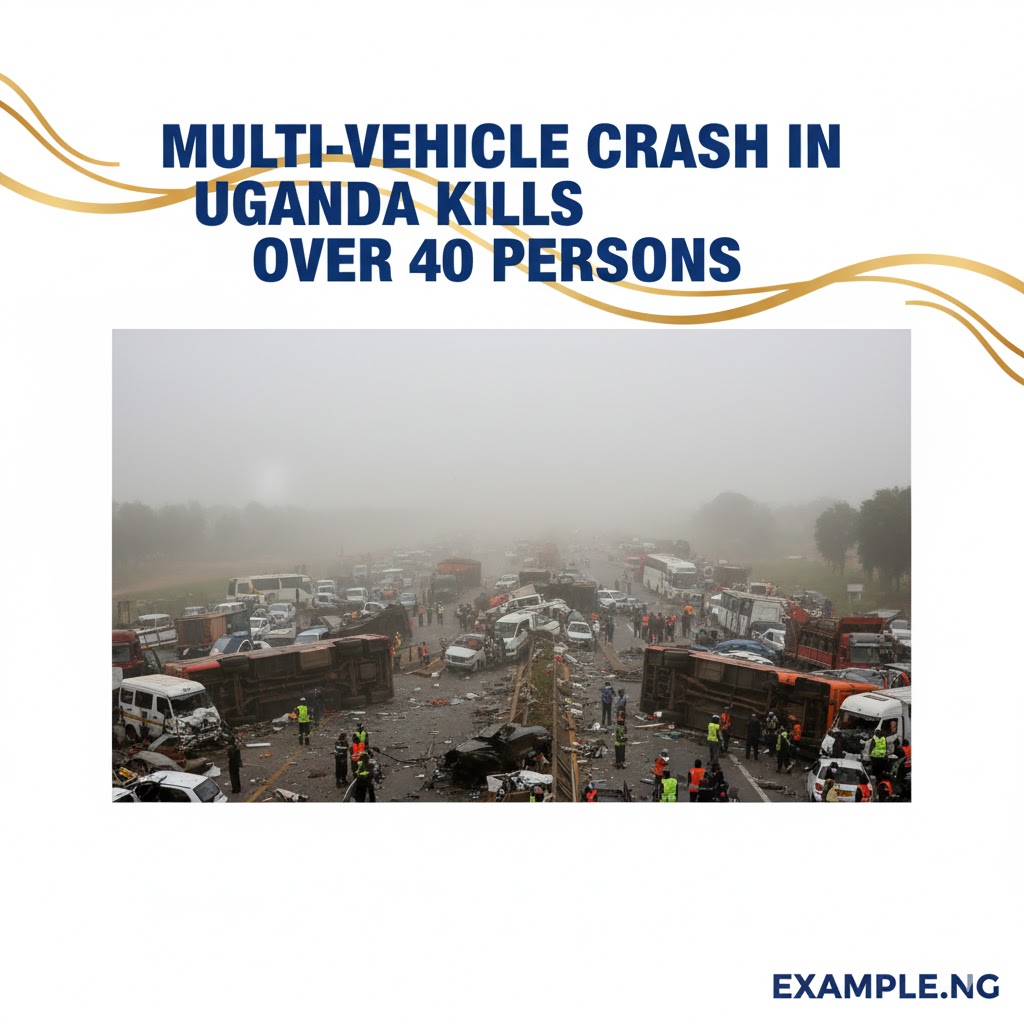
    According to the authorities, several cars collided on a major highway in Uganda, killing 46 people.

    An original death toll of 63 was lowered by the police, who claimed that they had inadvertently included victims who were asleep and receiving treatment.

    At 00:15 local time (21:15 GMT), two buses traveling in opposing directions “met head on” as they attempted to pass two other vehicles, a car and a truck, on the Kampala-Gulu Highway, according to the Uganda Police Force.

    One of the buses swerved in an attempt to avoid a crash, but in the process caused a “head on and side collision” that led to a “chain reaction” in which other vehicles lost control and overturned.

    According to authorities, the passengers of the involved vehicles as well as a number of other people were hurt in addition to the fatalities. An inquiry has been started.

    In the western town of Kiryandongo, the injured have been sent to several hospitals.

    As inquiries into the tragedy’s cause continue, police said in a statement that they were collaborating with emergency and medical services to confirm the figures and give correct updates.

    Regional Police spokesperson Julius Hakiiza attributed the crash to a bus that was “trying to overtake”.

    He told the BBC it had collided head-on “with another bus that was coming from a different direction”.

    He stated that the crash involved four vehicles.

    One of the busiest highways in the nation connects the northern city of Gulu with the southern capital, Kampala.

    Police have advised drivers to refrain from “dangerous and careless overtaking” in the wake of the collision.

    It stated that this “remains one of the leading causes of crashes in the country” .

  • Niger State Fuel Tank Explosion Kills Dozens Of People In Nigeria

    Niger State Fuel Tank Explosion Kills Dozens Of People In Nigeria

    Niger State Fuel Tank Explosion Kills Dozens Of People In Nigeria

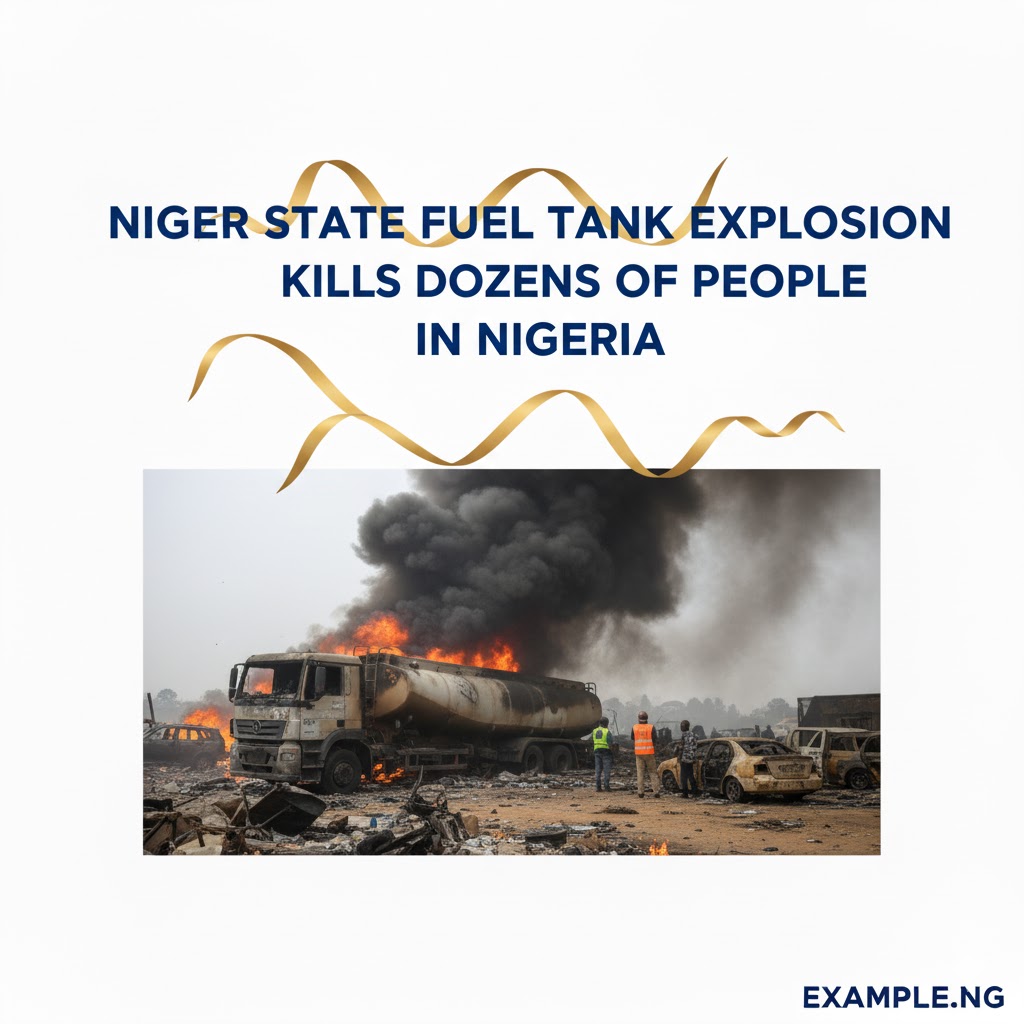
    In the central Niger state of Nigeria, an oil tanker exploded, killing dozens of people as the vehicle went off the road and collapsed, causing petroleum to pour.

    A huge inferno engulfed the villagers as they hurried to retrieve fuel from the overturned tanker, which detonated unexpectedly. According to reports, at least 40 individuals were injured to varied degrees, and about 30 people perished.

    Many victims were rendered completely incapacitated by the severe fire, and those who were hurt were sent to a local hospital for medical attention.

    Despite frequent warnings about the risks of recovering spilled fuel, tanker explosions continue to be a tragedy in Nigeria.

    In the Katcha Local Government Area of Niger State, the accident happened close to the Essan and Badeggi communities on the Bida-Agaie route.

    A local coordinator for the National Emergency Management Agency (Nema) told the AFP news agency that there were “29 dead and 42 injured” in the disaster, while the Reuters news agency cited Nigeria’s Federal Road Safety Corps agency as reporting that at least 35 people had died.

    Officials at Nema told the BBC that while they were investigating the event, they could not know how many people were impacted.

    Niger State Governor Mohammed Umaru Bago sent his condolences to the people, describing the incident as “worrisome, unfortunate and pathetic”.

    “[It] is disheartening how people have continued to approach a fallen tanker to scoop its contents” despite several awareness campaigns, said a statement by his chief press secretary Bologi Ibrahim.

    According to reports, the poor state of the road caused the tanker, which was transporting petroleum products from Lagos in southern Nigeria to the north, to crash.

    One of the main causes of traffic accidents in the nation is poor road conditions.

    In Jigawa state, in north-western Nigeria, a fuel truck explosion in October of last year claimed 153 lives.

    At least 86 people were killed and almost 70 others were injured when a truck carrying roughly 60,000 liters of gasoline crashed in Suleja, also in Niger state, in January of this year.

  • Ukraine Reports Six Dead After The Russian Drone And Missile Strikes

    Ukraine Reports Six Dead After The Russian Drone And Missile Strikes

    Ukraine Reports Six Dead After The Russian Drone And Missile Strikes

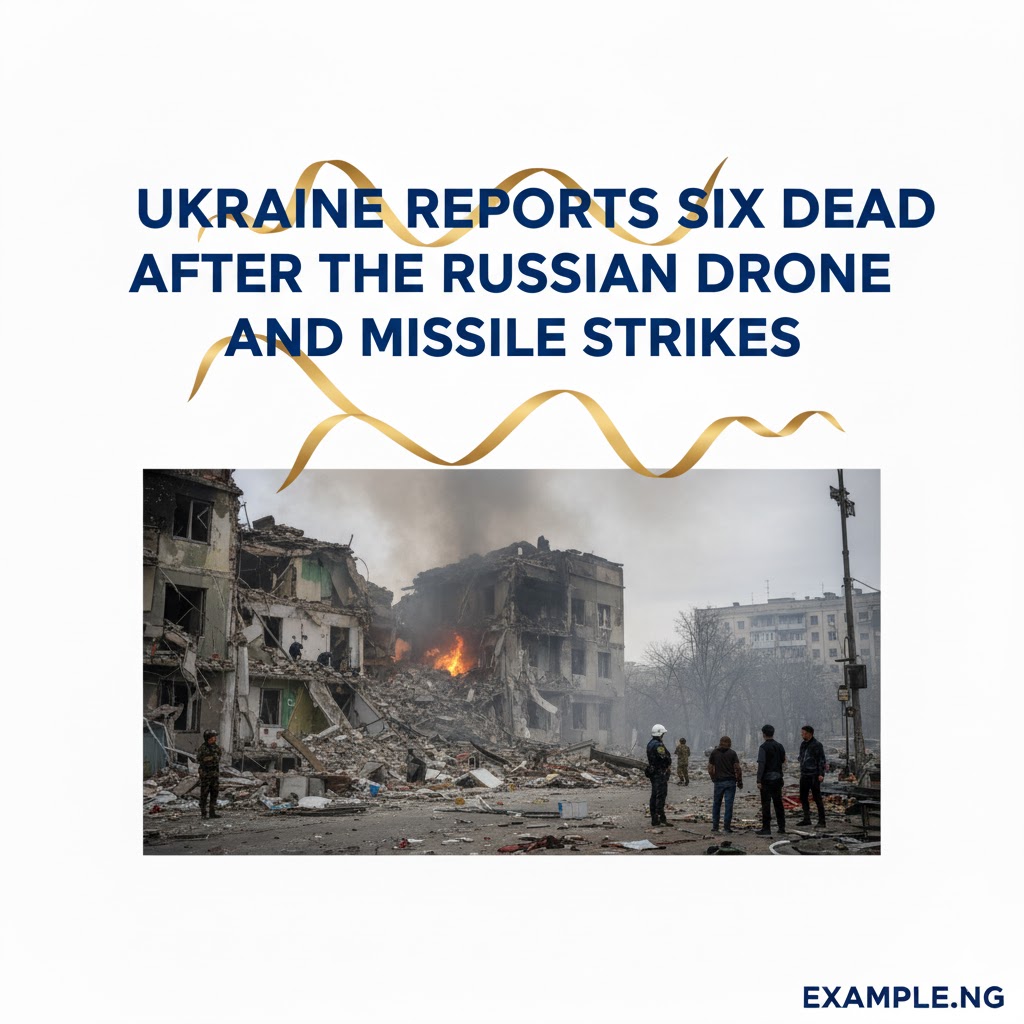
    According to President Volodymyr Zelensky, intense Russian drone and missile attacks on Ukrainian cities have killed at least six people, including two children.

    He claimed that another night of attacks left 21 people injured and demonstrated that Moscow was not under enough pressure to end the war.

    A few hours prior, US President Donald Trump said that he had canceled his intentions to meet with Russian President Vladimir Putin in Budapest because he did not want the meeting to be “wasted.”

    Both Trump and European leaders have called for a ceasefire along the current front lines, but the Kremlin has rejected these pleas.

    Meanwhile, Ukraine’s military reported using Storm Shadow missiles supplied by the UK to launch an attack on a Russian chemical factory in the Bryansk border region late Tuesday.

    According to military sources, the Bryansk factory “produces gunpowder, explosives, and rocket fuel components used in ammunition and missiles employed by the enemy to shell the territory of Ukraine.” They called the strike “a successful hit” that broke through the Russian air defense system.

    After failing to convince the US president to give long-range Tomahawk missiles, Zelensky returned from negotiations with Trump last Friday. He was scheduled to visit Swedish defense firm Saab on Wednesday.

    “As soon as the issue of long-range missiles became a little further away for us, for Ukraine, then almost automatically Russia became less interested in diplomacy,” Zelensky stated.

    Overnight, the Ukrainian capital saw a surge of attacks, the first since September 28.

    Four persons were killed in the larger Kyiv region, and a couple in their 60s was slain when a drone struck their high-rise building in the city. A woman, a six-month-old infant, and a 12-year-old girl were among the victims.

    The capital reverberated to the sound of explosions and spent the majority of the night under a ballistic missile warning. Rescue crews battled residential building fires by daybreak.

    Energy infrastructure in Ukraine was once again the focus of Russian strikes, and numerous regions experienced severe power shortages.