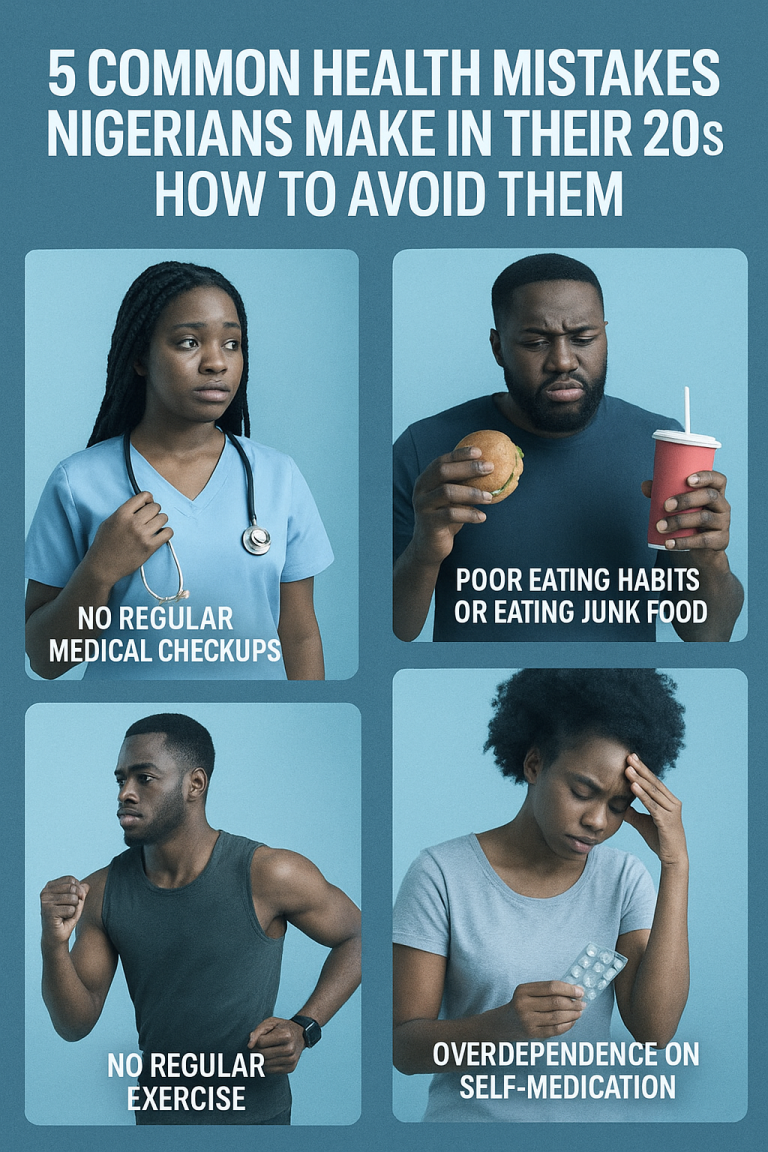
5 Common Health Mistakes Nigerians Make In Their 20s – How To Avoid Them
Table of Contents
The Nigerian population has more young people than older people. And the 20s are years full of excitement, dreams, and big life goals. During this, the young people are either schooling, graduated, starting careers, launching businesses or exploring their independence.
However, it is also a stage where decisions are made, in terms of health, goals, careers, finance, relationships, and to an extent, purpose.
The habits and mindset developed in the 20s are likely to set the pace for the actions, health and well-being of a person in their 30s, 40s, and above.
That is why I will share the five common health mistakes Nigerians make in their 20s and how to avoid them to help young people live healthy and develop good health routines.
They include the following.
- No Regular Medical Checkups
- Poor Eating Habits or Eating Junk Food
- Not Taking Care Of Mental Health
- No Regular Exercise
- Overdependence on Self-Medication
Now let’s discuss these five common health mistakes Nigerians make in their 20s – how to avoid them
No Regular Medical Checkups
Many young people and even older ones in Nigeria only visit the hospital when they are sick. But the truth is, going to the hospital often for check-ups helps prevent some minor health issues from becoming big ones. Most of the time, busy schedules, cost concerns, and other factors are the reasons for this.
Skipping regular medical check-ups can result in not noticing early warning or signs of diseases such as diabetes, infections, hypertension and more at an early stage. When this is ignored, small health problems can escalate into more severe ones, resulting in costly treatment.
How To Avoid It
- Go for regular medical check-ups at least once or twice a year.
- Take tests to check blood pressure, blood sugar, cholesterol, to be sure the body system is working fine. Some government-owned hospitals offer these services at affordable prices or at low prices.
Poor Eating Habits or Eating Junk Food
Sometimes, it’s a busy schedule, tight lectures, exam period, or just laziness that leads young adults to settle for quick and unhealthy meals like instant noodles, pastries, suya, and carbonated drinks, which are unhealthy when consumed too much.
Poor eating habits raise the risk of obesity, heart disease, digestive issues and also cause low energy and reduced concentration over time.
How To Avoid It
- Make a meal plan to include a balanced diet and nutrient-rich meals.
- Include fruits, vegetables, lean proteins, and whole grains in your diet
- Create a low-budget plan that covers all food items, including various food classes. For example, foods like beans, sweet potatoes, garden eggs, and fruits.
Not Taking Care Of Mental Health
A lot of Nigerians, both adults and young adults, are faced with mental health challenges like depression, anxiety, and stress, which are very serious health challenges that can lead to death or even suicidal attempts.
Ignoring mental health can lead to prolonged stress that can cause burnout, sleep problems, and physical illness. It can also harm relationships, productivity and decision making.
How To Avoid It
- Make being healthy a priority, and your mental well-being and physical wellness should be taken seriously.
- Practice wellness activities like exercise and engaging in hobbies you enjoy
- Seek professional help or counselling when necessary
No Regular Exercise
Busy schedules at work and school make it difficult for most Nigerians to engage in exercise and fitness activities. Neglecting exercise can lead to reduced fitness, muscle weakness, and a weaker immune system. It also increases the likelihood of lifestyle diseases like diabetes and high blood pressure.
How To Avoid It
- Engage in physical activities like brisk walking, jogging, running, and short home workouts using an online trainer or app.
Overdependence on Self-Medication
Most Nigerians are their personal doctors; even when they get a medical prescription, they still take more than the required dosage. Over-the-counter drugs like paracetamol, antibiotics, and herbal mixtures are often used without medical advice, and they are mostly abused.
This can lead to harmful side effects or cause a serious health condition later on
How To Avoid It
- Before taking medications, get advice from qualified healthcare providers or practitioners.
- Visit a doctor for better healthcare attention
Conclusion
Whether you are in your 20s or 30s, being healthy is a priority for everyone, because health is wealth. To prosper in other areas of life, a person needs to be in good health first. Avoid these five common mistakes and stick to good health habits by making healthier choices.
If you have questions or concerns, feel free to drop them in the comment section.
.