ChatGPT In Sermon – Using ChatGPT In Sermon Preparation
Preparing a sermon can be a rough path to walk for most pastors, even though, in the end, it is always captivating for the audience. With the stress one has to go through to make a sermon, ChatGPT is here to ease your pain.
The success of your ministry as a pastor depends on your ability to create captivating and motivating sermons. OpenAI created a state-of-the-art language model called ChatGPT.
It presents a rare opportunity to accelerate the process of preparing your sermon by utilizing the power of AI and machine learning. Here are some specific instances showing how ChatGPT can help pastors on their path to delivering a powerful sermon.
Biblical Study And Exploration
The study of Scripture is a crucial component of preparing a sermon. Pastors can gain a wealth of information and understanding through ChatGPT to help them better understand the Bible. A pastor, for instance, can use ChatGPT to ask questions like, “What is the historical context of the book of Romans?” or “What is the cultural significance of the parable of the Good Samaritan?” to get a deeper understanding of the text.
Additionally, ChatGPT can offer comparisons and cross-references to other biblical passages, enabling pastors to craft a comprehensive sermon. For instance, what are some similarities between the teachings of Jesus in the Gospels of Matthew and Mark?
Generating Sermon Topics
Finding timely and thought-provoking sermon topics can be difficult. By offering simple query-based suggestions for fresh and creative sermon topics, ChatGPT provides an easy solution.
A pastor might look to ChatGPT for ideas on “creative sermon topics on love” or “modern takes on the Ten Commandments,” for example. Additionally, ChatGPT can suggest sermon topics by looking at the pastor’s interests and previous sermons. For example, it can ask the pastor, “What topics have you covered in your past sermons that received the most positive feedback from your congregation?”
Speech Writing And Presentation
Additionally, ChatGPT can help pastors improve the content and delivery of their sermons. The sermon can be more interesting and persuasive using the language model’s suggestions for suitable word choices, sentence construction, and phrasing.
A pastor might inquire on ChatGPT for advice on “strong words to use in a sermon on hope” or “the best sentence structure to convey the message of forgiveness,” for instance.
Additionally, ChatGPT can offer suggestions for improvement based on an analysis of the pastor’s speaking style, enabling the pastor to deliver their sermon with assurance and clarity. For example, “What can I do to improve my delivery and make my sermons more impactful?”
Analytics And Insights
Finally, ChatGPT offers insightful analytics that helps determine the effectiveness of a pastor’s sermon. Pastors can understand what works and what doesn’t by using ChatGPT to track engagement, feedback, and other metrics.
A pastor might inquire on ChatGPT for advice on “What elements of my most recent sermons received the most positive feedback from my congregation?” or “What can I do to improve the engagement of my audience during my sermons?” as two examples. Future sermons can be continually improved using this data to reach a larger audience. In conclusion, ChatGPT offers pastors a powerful tool for sermon planning.
ChatGPT can take a pastor’s sermon to the next level, whether the pastor is looking for knowledge and insights, fresh sermon themes, or assistance in writing and delivering. So why not take advantage of this chance and observe the impact ChatGPT can have on your ministry right now?
AI Video Generators – The 9 Best AI Video Generators (Text-to-Video)
Lacking the time or skills to produce a video for your online business? Test out these labour-saving AI video generators by using them. The process of editing a video takes a lot of time and effort.
Even the best video editing software still needs a lot of human input for impressive results. For our benefit, AI tools are now a reality. Next-generation artificial intelligence (AI) video generators automate video creation and editing without sacrificing quality.
Here, we go over some of the top text-to-video applications powered by AI that will simplify your life. In a few clicks, you’ll soon be producing captivating videos for your company or personal use.
Best AI Video Generators
There are several AI video generators available in the market, each with its unique features and capabilities. Here are some of the best AI video generators:
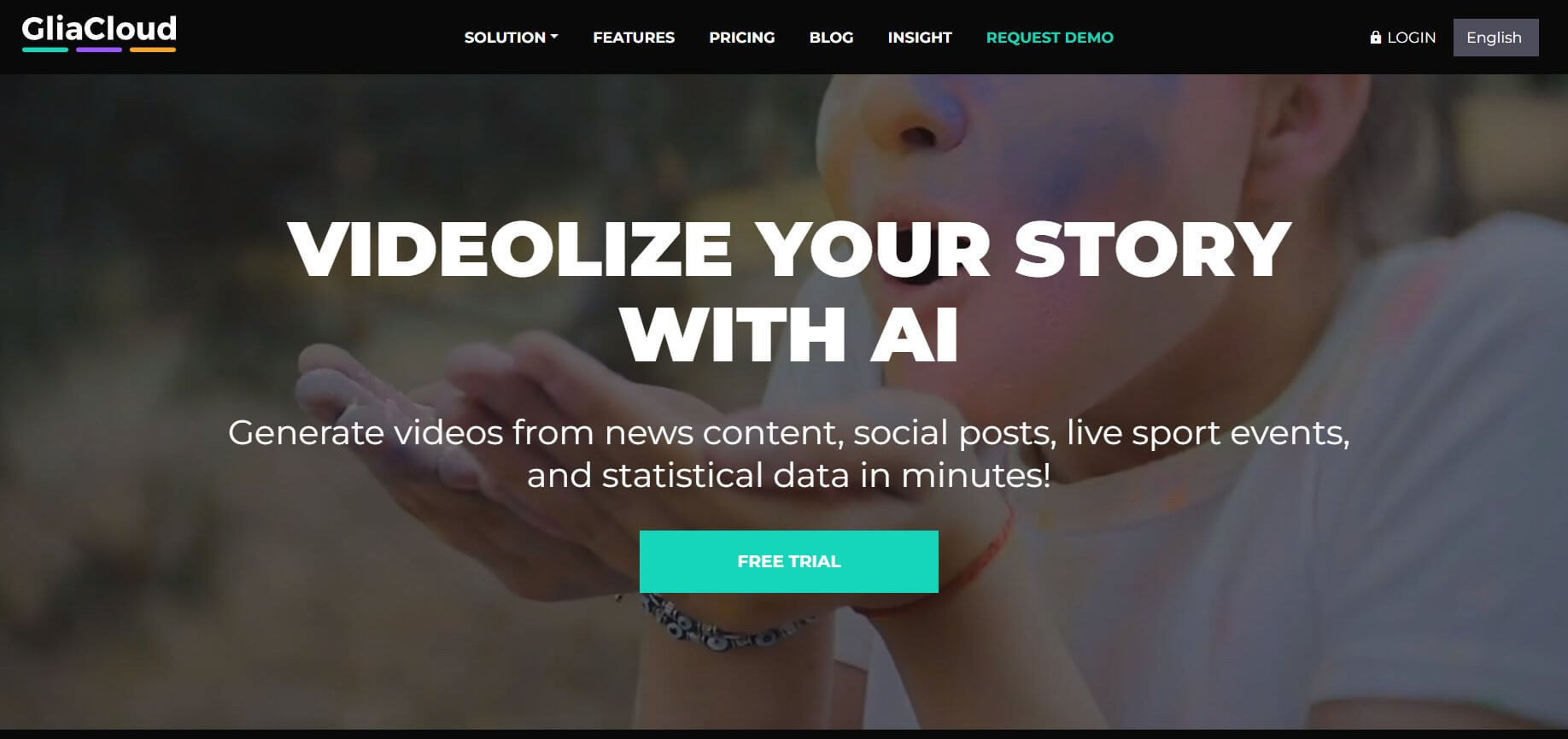
1. GliaCloud
As you probably already know, having videos on your website or blog can increase traffic, engagement, and conversions. You might not have the time or necessary skills to make them.
Using GliaCloud, you can quickly and easily turn existing text content into polished videos. No specialized tools or prior experience with video editing programs are required. It will automatically create an interesting video after you upload your article or post the URL.
Before creating an HD video file ready for upload to your website or social media channels, you can preview and edit this script as needed.
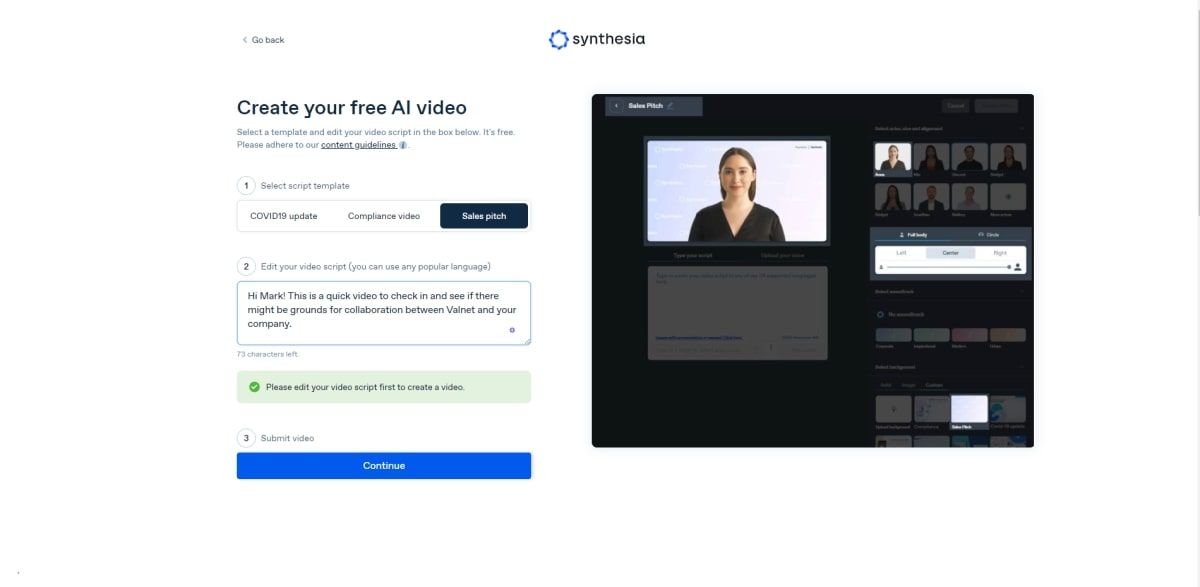
2. Synthesia
Without using actors, cameras, or microphones, Synthesia is an AI video maker that uses cutting-edge natural language processing (NLP) and machine learning algorithms to produce high-quality videos from the text in more than 50 languages.
It’s ideal for people who want to make videos for their own use or for small businesses that need additional content but can’t afford to hire professionals. This AI text-to-video generator can create pertinent and interesting videos by analyzing the content of your blog posts, news articles, and website pages.
Signing up, choosing an AI avatar from more than 40 options or custom creating your own, typing or pasting your script, and downloading your AI videos after a short while are all required. Additionally, you can translate your videos right from Synthesia.
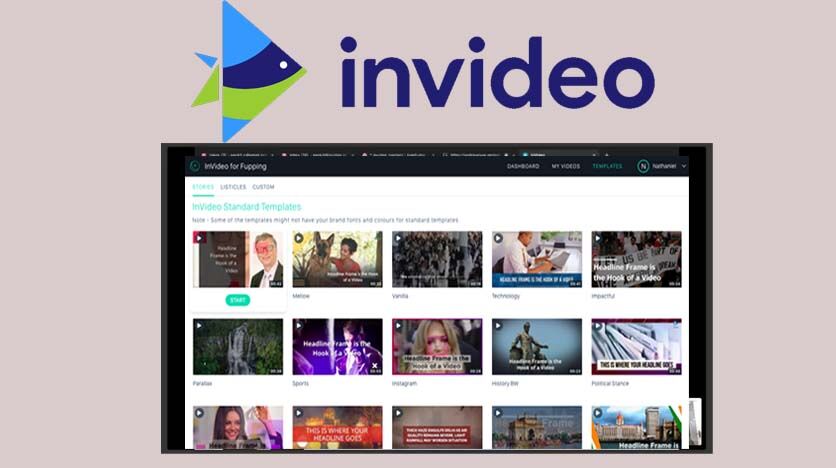
3. InVideo
An AI-powered video maker called InVideo produces videos from text input. Using templates that are already expertly designed and animated, this tool makes it simple to produce high-quality videos quickly.
All you have to do is enter your text, choose a template that works for you, edit it yourself, and either download the finished product or share it directly on social media platforms like Facebook, Instagram, and YouTube.
This tool can be used to make various videos, including slideshows, memes, promotional videos, presentations, testimonials, and much more.
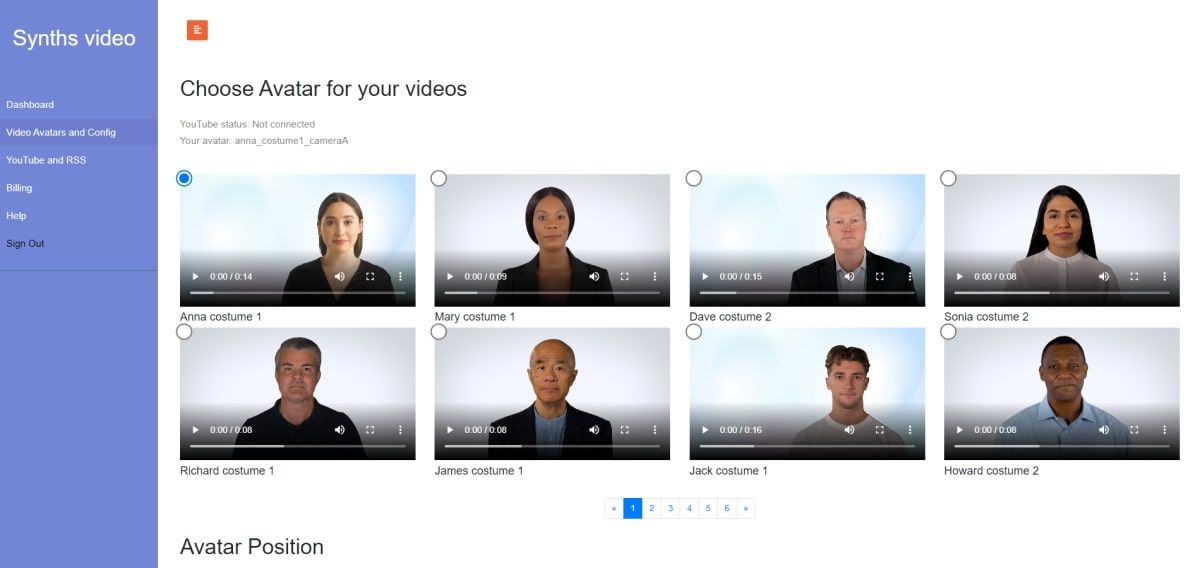
4. Synths Video
In search of a fresh approach to hook your audience? Any blog post can be quickly and easily converted into an interesting video using Synths Video. Also available are more than 40 options for adding a human avatar.
This tool uses artificial intelligence to create realistic-looking lip movements based on the text you provide. You don’t need to worry about technical issues; no prior editing knowledge is necessary because everything is automated.
Simply write your blog post as usual, upload the file to Synths Video, and it will turn it into an interesting video that you can upload to YouTube directly.
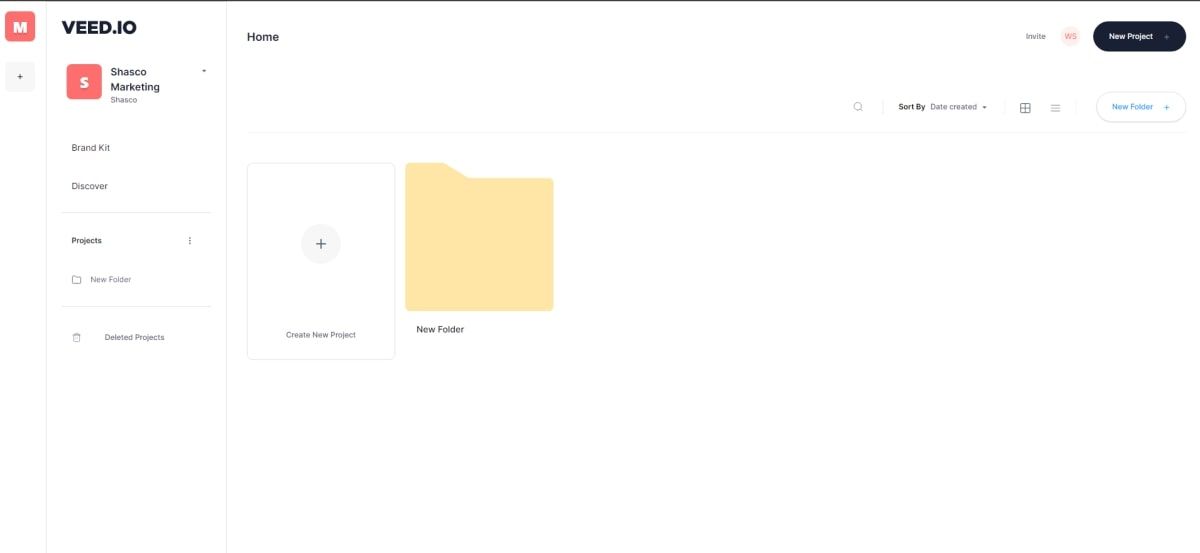
5. VEED.IO
Many editing programs are too complex for someone who isn’t a professional video editor. Even if you are an expert, learning how to use each tool takes hours before you can produce anything actually interesting.
Anyone with even the most fundamental computer skills can create excellent videos using VEED.IO without any prior training or experience in video editing.
By adjusting the text, colours, fonts, music, and other elements, you can use it to produce powerful videos. Depending on the message you want your video to convey, you can even select a theme from various options.
6. Lumen5
Lumen5 is a tool for creating videos that enables you to transform content into visually appealing stories for marketing and brand awareness.
You can use this tool to build an interactive story with just a few clicks. One of our favourite features is that it uses AI to find musical visuals that will further enhance your message.
The only thing you need to use is a script, and it takes care of the rest. It looks for layouts that go perfectly with what you’ve written and superimposes them on a stunning background—very aesthetically pleasing.
7. Pictory
Ever wished you could quickly turn lengthy text or video content into short, social media-friendly videos? With Pictory, you can do that with ease.
A short, captivating visual story created by Pictory will be ideal for sharing on Facebook, Instagram, or Twitter after you sign up and upload your text or long-form video.
Using this tool, you can create videos faster, make your business more visible, and carry out social media activity with much less effort.
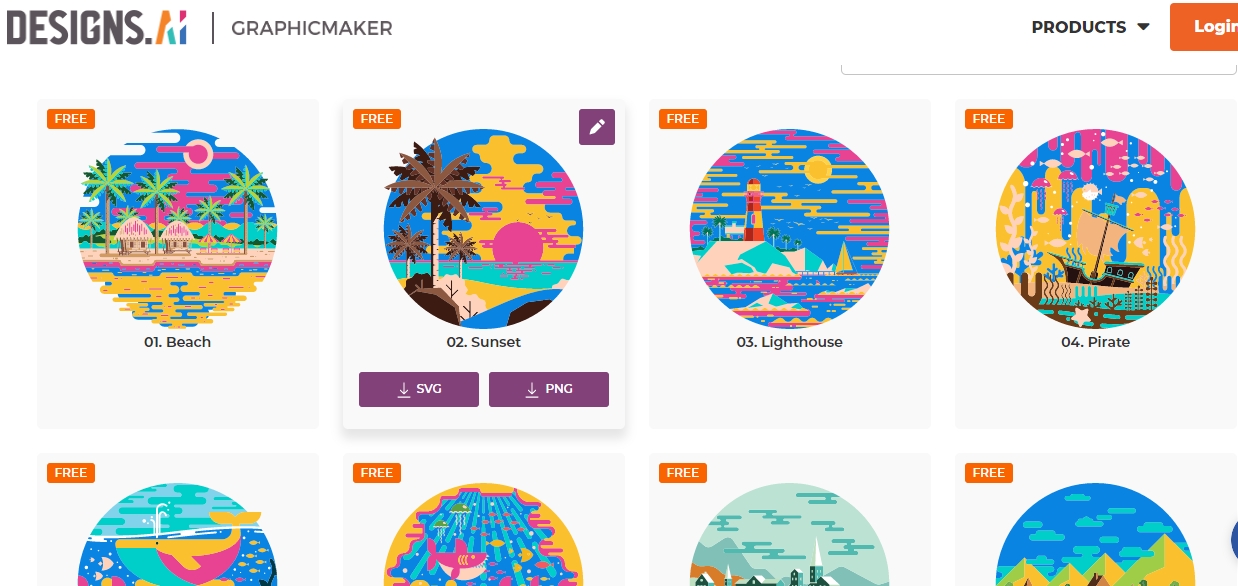
8. Designs.ai
To create professional videos automatically, quickly, and easily, Designs.ai uses artificial intelligence. Simple steps include signing up, pasting your text, and choosing the appropriate industry, language, and voiceover option.
As a result, your story will be powerfully told through audio and visuals, grabbing the audience’s attention. And in more than 20 different languages, you can obtain the same outcomes.
To maximize the effectiveness of your social media marketing campaigns, you can use Designs.ai to resize your videos for Facebook, Instagram, Twitter, or TikTok. You can quickly create logos, banners, and voiceovers using this AI-enhanced tool.
OpenAI’s ChatGPT – 6 Big Problems With OpenAI’s ChatGPT
How many impressive responses can be believed by OpenAI’s new chatbot? Let’s look at ChatGPT’s sinister side. Readers like you assist in funding MUO.
We might receive an affiliate commission if you buy something after clicking on one of our website’s links. View More. Many people have noted that ChatGPT has some significant flaws despite being a potent new AI chatbot that is quick to impress.
You can ask it anything, and it will respond with an answer that appears to have been written by a human, having developed its writing and knowledge through training on vast amounts of information from the internet.
But just like the internet, the line between reality and fiction is unreliable, and ChatGPT has made mistakes in this regard on numerous occasions. Here are some of our top worries as ChatGPT is poised to alter our future.
What Is ChatGPT?
A sizable language model called ChatGPT was created to mimic the sounds of real human speech. You can converse with ChatGPT just like you would with a human being, and it will remember what you have said in the past and be able to correct itself when necessary. It was trained using a variety of internet texts, including Wikipedia, blog posts, books, and scholarly articles.
This means that in addition to responding to you in a human-like manner, it can also retrieve historical data from our past and information about our current world. It’s easy to pick up how to use ChatGPT, and it’s simple to believe that the AI system works without problems.
But in the following months, users worldwide pushed the AI chatbot to its breaking point, exposing some significant issues.
1. ChatGPT Generates Wrong Answers
Itfails at simple math, can’t seem to solve simple logic problems, and will even argue completely false facts. ChatGPT can make mistakes from time to time, as users on social media can attest. As stated by OpenAI, “ChatGPT occasionally writes plausible-sounding but incorrect or nonsensical answers.”
This blurring of fact and fiction, or “hallucination,” as it has been called, is particularly risky regarding matters like giving sound medical advice or accurately describing significant historical events. ChatGPT doesn’t search the internet for solutions like other AI assistants like Siri or Alexa do. Instead, based on its training, it builds a sentence word by word, choosing the most likely “token” to come next.
To put it another way, ChatGPT generates answers by making a series of educated guesses, which is one of the reasons it can present false answers as if they were entirely true. It’s a fantastic tool for learning because it can clearly explain difficult concepts, but you shouldn’t take everything it says at face value. At least for now, ChatGPT isn’t always accurate.
2. ChatGPT Has Bias Baked Into Its System
The collective writing of people in the past and present was used to train ChatGPT. Sadly, this implies that the biases present in the real world can also be seen in the model. The company is attempting to address the fact that ChatGPT has been shown to produce some appalling responses that discriminate against gender, race, and minority groups.
One way to frame this problem is to say that the data is the issue, attributing human nature to the biases on the internet and elsewhere. However, the data chosen by OpenAI’s researchers and developers to train ChatGPT also bears some of the blame.
Once more, OpenAI acknowledges this problem and claims to address it by gathering feedback from users who are encouraged to flag subpar ChatGPT outputs. You could argue that ChatGPT shouldn’t have been made available to the general public before these issues were investigated and fixed because they could endanger people.
OpenAI may ignore caution in the race to be the first business to release the most potent AI tools. In contrast, Google’s parent company, Alphabet, introduced a comparable AI chatbot in September 2022 under Sparrow.
However, it was purposely kept behind closed doors due to similar safety concerns. Facebook released the Galactica AI language model at about the same time, with the goal of assisting academic research. After receiving harsh criticism for producing inaccurate and biased results in connection with scientific research, it was swiftly recalled.
3. ChatGPT Might Take Jobs From Humans
The underlying technology behind ChatGPT is already being integrated into several commercial apps, but the dust has not yet settled after the quick development and deployment of the service. Khan Academy and Duolingo are two apps that incorporate the GPT-4. The latter is a tool for various educational learning, while the former is a language-learning app.
Both provide what is essentially an AI tutor in the form of a character that you can communicate within the language you are learning. Or as a tutor provided by AI who can provide personalized feedback on your learning. On the one hand, this might alter how we learn, possibly making education more approachable and a little simpler.
The drawback is that this eliminates jobs held by people for a very long time. Jobs have always been lost as a result of technological advancement, but due to the speed of AI development, this problem is now being experienced across many industries.
ChatGPT and the underlying technology will fundamentally alter every aspect of our contemporary world, from education to illustration to customer service positions.
4. ChatGPT Could Challenge High School English
You can request that ChatGPT edit your writing or suggest strengthening a paragraph. The alternative is to completely remove yourself from the situation and ask ChatGPT to handle all the writing.
English assignments have been fed to ChatGPT in an experiment by teachers, and the results have been superior to those of many of their students. ChatGPT can write cover letters, outline key themes in a well-known work of literature, and much more.
If ChatGPT can write for us, will students still need to learn how to write in the future? It might sound like an existential query, but schools will need to respond quickly when students start using ChatGPT to assist with essay writing. Education is just one of the industries that will be shocked by the recent rapid adoption of AI.
5. ChatGPT Could Cause Real-World Harm
Earlier, we discussed how ChatGPT’s inaccurate information could harm people in the real world, citing incorrect medical advice as an example. However, there are still other issues. Scammers can easily pose as someone you know on social media, thanks to how quickly natural-sounding text can be generated.
A similar benefit is that ChatGPT can produce text that is free of grammatical errors, which used to be an obvious red flag in phishing emails meant to extract sensitive information from you. Another major worry is the dissemination of false information.
Information on the internet will undoubtedly become even shakier due to the scale at which ChatGPT can produce text and its capacity to make even false information sound convincingly true. Stack Exchange, a website that offers accurate responses to common questions, has already experienced issues due to the speed at which ChatGPT can produce information. Soon after ChatGPT’s launch, users began clogging the website with the responses they requested ChatGPT to produce.
Maintaining a high standard of answers would be impossible without human volunteers to go through the backlog. Not to mention that many of the responses were just plain wrong. There is now a ban on all responses produced by ChatGPT to protect the website.
6. OpenAI Holds All the Power
Since OpenAI has a lot of power, it also comes with a lot of responsibility. With not just one but several generative AI models, such as Dall-E 2, GPT-3, and GPT-4, it is one of the first AI companies to shake up the world truly.
OpenAI selects the data used to train ChatGPT, but this decision-making process is private. We don’t know the specifics of ChatGPT’s training, the data used, the data sources, or the system’s overall architecture.
Although safety is a top priority for OpenAI, we still don’t fully understand how the models function, for better or worse. There isn’t much we can do about it, whether you believe that the code should be made open source or that it should keep some of it secret.
Ultimately, we must blindly believe that OpenAI will responsibly investigate, create, and use ChatGPT. Regardless of whether we concur with the approaches, OpenAI will continue to develop ChatGPT according to its objectives and moral principles.
Tackling AI’s Biggest Problems
With ChatGPT, there is a lot to be excited about, but beyond its practical applications, some grave issues are important to comprehend. OpenAI acknowledges that ChatGPT can provide inaccurate and biased results but aims to address the issue by obtaining user feedback.
But those with bad intentions can easily use their capacity to produce persuasive text, even when the facts are false. It can be challenging to foresee future issues with cutting-edge technology. So, even though it might be entertaining, be careful not to take ChatGPT’s claims at face value.
ChatGPT And CryptoGPT – 20 Ways To Increase Productivity With ChatGPT And CryptoGPT
ChatGPT, the OpenAI conversational AI chatbot, has generated a lot of buzz. The application is available in both a free and paid version, and businesses like Microsoft are investing billions to use the technology in upcoming releases of CRM and Office.
But that is present. And right now? Numerous people are enjoying what the bot can do. But let’s get real: what features does ChatGPT offer your company right now?
What Functions Can ChatGPT Do For Your Business Today?
Here are 20 ways you can use ChatGPT in your company to service and sell to your customers and get more productivity from your employees…immediately. Caveats at the end.
1. Programming
Whether you’re a seasoned programmer or a beginner, your code occasionally has a few bugs. And while dealing with these issues can be difficult, ChatGPT can help you focus on a specific area of your code rather than spending hours searching for errant commas.
ChatGPT allows you to create complete blocks of functional code from scratch. The same may occur if you ask ChatGPT to troubleshoot already-written code.
2. Blogs
Blog posts significantly influence Google’s preference to rank websites based on their activities and engagement, among other factors, to get them found.
In a fraction of the time it would take to write a blog post from scratch, ChatGPT can produce multiple blog posts for your website each week, which will boost your search engine rankings.
A strong name, title, and/or headline are necessary for a piece of content to perform well on search engines, making this a significant advantage of generative AI tools like ChatGPT.
In addition, Bloggers can leverage the potential of this conversational AI to generate catchy titles and apply them to naming blogs, podcasts, and webinars to help boost their websites.
3. Market Research, Business Tips and Advice
You can ask ChatGPT questions about the market, demographics, and potential revenue if you’re opening a shop or restaurant or considering a new product line.
Should you purchase or rent that space?
Is that new piece of equipment profitable?
Would it make sense if you had to refinance your working capital line?
If you ask ChatGPT, you might get useful responses to these and other operational queries. ChatGPT offers practical information on market research, business advice, and expert marketing guidance in this way. It might be necessary before you launch your business.
4. Legal Forms, Legal Questions And Legal agreements
Ask ChatGPT to draft any standard business legal documents for you, including an employment contract, an independent contractor agreement, a purchase agreement, a straightforward bill of sale, etc.
What zoning regulations apply in your area?
Is sick leave required?
How often ought the city to have its scales checked?
Ask ChatGPT, and it will respond with the solution. When asked about legal issues clearly and concisely, ChatGPT responds with accurate and pertinent information.
5. Scientific Research
The tools used in scientific research are changing along with the field itself. Ask ChatGPT if you’re planning a scientific study and need assistance compiling your results into a formal paper for review.
Regarding the writing context, the OpenAI bot ChatGPT has made significant progress. It might be able to generate content, references, and low-plagiarized content.
6. Online Chat And Support
A more sophisticated application of ChatGPT would be to use it in place of a customer service representative to conversely address common queries, much like how you might use your database. Like any AI system, ChatGPT is not entirely capable of comprehending emotions.
The management of relationships with customers, staff, and the general public can still benefit from its practical advice. If you give it the right prompts, it might be your personal therapist or relationship expert.
7. Tax Questions
Organizations are expected to be familiar with the local tax regulations. You need to be aware of the taxable goods or products and the percentage to subtract.
You could use it to calculate your personal income tax or withholding tax. All you have to do is input crucial data into Ask ChatGPT or CryptoGPT, and you’ll receive some guidance.
8. HR Policies And HR Questions
Policies are always essential for every organisation to function well. And it could be strenuous to create one.
Do you need a social media usage policy for employees? The use of drugs at work? Sexual assault? Request that ChatGPT create one for you. Have a tricky circumstance? An employee conflict? Nepotism? Theft?
Many of these problems arise at work. If something does occur, you can get advice from ChatGPT on how to handle these worries.
9. Product Descriptions
To increase sales, every product needs a strong product description. Consequently, you will need to create a product description. You must think of a jazzy way to describe the goods you are selling.
ChatGPT will solve your issue.
Give ChatGPT a portion of the data and watch what it generates. It quickly displays a great description of the product information you provided. Product descriptions are quicker and simpler for businesses with ChatGPT.
10. Real Estate Descriptions
Same as above, except you can use ChatGPT to work its magic on making that dilapidated property your brokerage is trying to sell look like a real bargain!
11. Sales Pitch
Want to contact a potential customer? You want to remind a client about an outstanding quote. Are you trying to think of something to say? Get ChatGPT to recommend a persuasive sales message that you can send.
ChatGPT stands out from the competition thanks to its capacity to design customized sales pitch responses for clients. It provides beneficial sales messages that can increase sales in a short amount of time.
12. Company Newsletter, Internal Memos And Brochures
Ask ChatGPT to prepare your monthly newsletter based on new additions to your website or other information you give it.
Have ChatGPT look at your monthly financial statements, sales pipeline or open orders and then write your monthly memo to your team based on that information.
Need a great new brochure that visitors can download? Give ChatGPT your product and company info and ask it to write one.
13. Quotes
We all know that a good quote can set sail for a sale in business. In fact, business quotes can launch a sale. So it’s important to get the right business quotes. To create a quote based on current (or customer-specific) pricing, integrate ChatGPT with your inventory management and ERP system.
It offers quotes that are appropriate for any business transaction you desire and offers additional guidance as necessary.
14. Math
Solving maths problems can be a pain in the neck. But there’s ChatGPT which helps break down such problems for you.
Instead of using a calculator, ask ChatGPT your question in plain English, and it will respond with an answer in the same language.
ChatGPT excels at handling math, whether you want to work through difficult algebra or simple math problems that are too difficult. For the best outcomes, you must clearly and succinctly state your problems.
15. Translation
Do you offer translation services on Fiverr or Upwork? Dealing with an Asian or European client? You can ask ChatGPT to translate any document you upload written in their native tongue.
If you’re a content creator or a businessperson who wants to reach a larger audience, ChatGPT could be incredibly helpful for producing content in multiple languages.
Although Google Translate is available, many contexts and linguistic cues may be lost when translating from one language to another. Direct content creation in multiple languages is possible with ChatGPT. Chinese? Check. Yes, Spanish. French? Check.
16. Multi-Language Content
Want a sales brochure tailored specifically for French clients? Or an email to a possible Japanese business partner? I’m assuming your Japanese isn’t much better than your French. But do not fret.
With any English document that you give ChatGPT, it will carry out that action.
ChatGPT is available to you. It is renowned for being one of the chatbots that offer content in various languages based on your preferences.
17. Meeting Preparation And Management
Heading into a meeting and you’ve never met the prospect before? Ask ChatGPT to do some stalking and find out everything possible about that person from any public source available.
Once Microsoft releases its version of Teams that leverages ChatGPT in June, Office 365 users can generate automatic meeting notes, recommend tasks and help create meeting templates for Teams users.
ChatGPT also holds the potential to streamline meeting management, with businesses like Moo Soft using the AI-backed software to summarize meeting transcripts to make information more accessible to remote workers who cannot tune into calls.
18. Office Management
Once Microsoft releases a future version of Office, you can ask ChatGPT to create spreadsheets and PowerPoint documents based on the information you provide to the bot.
19. Training
Need a new set of training materials for your products? Give ChatGPT the information about the product and ask it to prepare. It gives crucial details to the latter. It serves the purpose efficiently and fast too.
20. Job Listing And Job Description
Are you looking for a job? Are you looking for a job that fits your description? Are you struggling to write an exceptional cover or application letter?
Then ChatGPT is for you. You can ask ChatGPT to write the perfect ad for the next job listing you make. Or a full-out job description for each position.
<
p style=”text-align: justify;”>Connect to ChatGPT Here
Connect to CryptoGPT Here
ChatGPT Alternatives – 9 Best ChatGPT Alternatives (Free and Paid)
If you haven’t been living under a rock, you must be aware of ChatGPT’s explosive rise to fame online. The foundation of the chatbot’s OpenAI GPT-3 language model allows users to interact with it by asking questions.
The servers for ChatGPT, however, have recently experienced frequent user overload. Because of this, users are no longer able to use this incredibly helpful and fascinating AI bot. If you’re one of the people who can’t access ChatGPT or want to try out other services of a similar nature, you’ve come to the right place.
You should review the alternatives to ChatGPT that we have listed in this guide. So without further ado, launch new browser tabs, and let’s chat with some AI bots.
Best ChatGPT Alternatives in 2023 (Free & Paid)
Despite the fact that we’ve listed a number of tools that are comparable to ChatGPT, we’ve also included some other related AI tools that we think you’ll find interesting. Check out the tools that interest you using the table below.
1. CryptoGPT
A blockchain protocol called CryptoGPT was developed to usher in a trillion-dollar revolution in data and artificial intelligence (AI). This innovation combines AI and blockchain technology in a novel way, providing an ecosystem that views data as an asset class.
Its pioneers began combining blockchain technology with AI tools to give users a way to monetize their data. It should be possible for you to make money off of your own data. With CryptoGPT’s new features, that opportunity is actually coming to pass.
With the help of the features provided by CryptoGPT, which are supported by AI tools and blockchain technology, the company hopes to assist you in profiting from the sale of your data. Decentralization of a trillion-dollar economic sector may be the outcome.
Artificial intelligence is at the heart of CryptoGPT, which came out of the shadows at a time when AI businesses were mushrooming. By entering the market with a strong value proposition, CryptoGPT stood out from the majority of participants in this artificial intelligence boom.
User data is necessary for new app developers to be successful. The distinctive ecosystem of CryptoGPT provides the data that users like you sell to them. The sale is conducted through the GPT token from CryptoGPT. Your activity data is tracked by NFTs in the CryptoGPT ecosystem, which also pays you in GPT.
Pros:
High Security: The Ledger Nano S is one of the most secure ways to store cryptocurrencies, thanks to its offline storage and private key management.
Multiple Cryptocurrencies: The wallet supports a wide range of cryptocurrencies, including Ethereum, Bitcoin, and many others.
Ease of Use: The device is user-friendly and easy to set up, making it a good choice for beginners.
Portable: The compact design of the device makes it easy to carry around, making it a good option for users who need to access their crypto on the go.
Compatibility: The Ledger Nano S can be used with a variety of wallets and applications, allowing users to easily manage their crypto holdings.
Cons:
Cost: The Ledger Nano S is more expensive than other wallet options, which may be a drawback for some users.
Limited Storage: The device has limited storage space and can only hold a limited number of apps and cryptocurrencies at once.
Backup: Users must back up their recovery phrase in order to recover their account if the device is lost or stolen, which can be a potential point of vulnerability if not done securely.
Third-Party Apps: Some third-party apps may not be compatible with the Ledger Nano S, which could limit its functionality for some users.
2. Chatsonic
Chatsonic is one of the newest and most complete ChatGPT alternatives that has recently grown in popularity. It now has access to its enormous potential as ChatGPT was built on top of it. However, because it has Internet access, the latter cannot yet compete with this AI chatbot in terms of features and expertise.
To disseminate accurate information and lower error rates, Chatsonic can output solutions using internet searches. Additionally, the AI chatbot keeps track of previous conversations and draws on them to continue the current one. It has 16 different personas, ranging from a poet to an accountant, if you want to talk to someone else.
Unlike ChatGPT, the AI will respond to you in voice if you prefer, and you can even use your microphone to speak to it (just like you would with Siri or Google Assistant). Following the discussion, you can distribute the responses in the form of links, Word or PDF documents.
I had a good experience with ChatSonic overall. I thought it could present information more skillfully than ChatGPT because it had access to the Internet and the most recent data.
Chatsonic has an integrated image generator that creates good images from the prompts you supply in addition to text. Despite being a paid service, the bot provides 25 free generations each day after which you can use your Writesonic word balance to produce additional images. For more, consider the long-form plan, which has starting monthly costs as low as $12.67.
Additionally, this outstanding ChatGPT substitute has an Android app and a browser extension you can use.
Pros
Cons
Internet access brings broader knowledge
Only 25 free generations
Different personas bring variety to conversations
Companion browser extension and Android app
Can read the response back
3. Jasper Chat
Jasper has earned the trust of its users since it began producing artificial intelligence content. However, Jasper also offers a relatively recent chatbot in addition to its content creation tools and other services.
With OpenAI as a partner, this ChatGPT replacement, aptly named Jasper Chat, is built on GPT 3.5 and additional language models. Contrary to ChatGPT, JasperChat was developed for industries like marketing, advertising, and other related fields.
However, Jasper Chat is a simple option for anyone looking for an AI chatbot that is comparable to ChatGPT. According to the company, Jasper Chat had learned from billions of articles and other pieces of information by mid-2021, in 29 languages.
Therefore, it can still hold moderately complex conversations even though it might not contain the most recent information. Additionally, a handy toggle to add Google search data gives it even more strength.
I found Jasper Chat to be a helpful chat partner while using it. I made the chatbot tell jokes, write video scripts, answer riddles, and even tell me tongue twisters. I also had success with a few of the advertisements I tried.
Jasper has contextual memory, allowing it to remember prior commands. The fact that Jasper is not a research engine, however, and that all outputs should be verified, is made abundantly clear in the software.
Jasper Chat is completely free, but in order to access all of its features, you must either have the Boss or Business plan. Starting out, the Boss Plan costs $59 per month. Despite not being particularly cheap, it gives you access to all of Jasper’s services. Grab the free 5-day trial to see if it’s right for you.
Pros
Cons
Can hold intelligent conversations
Locked behind an expensive paywall
A boon for marketers and working professionals
Slightly old dataset
4. Character AI
Even though Chatsonic has personas, the concept behind this ChatGPT replacement is entirely based on them. Conversations have been the primary focus of training for the neural language models that serve as the cornerstone of character AI. Character gives users the option to choose from a variety of personalities in place of interacting with a single AI chatbot.
Although Chatsonic has personas, the idea for this ChatGPT substitute is entirely based on them. The neural language models that form the basis of character AI have been trained primarily using conversations. Instead of interacting with a single AI chatbot, Character gives users a selection of personalities to choose from.
A small sampling of the numerous figures and characters that can be found on the home page includes Joe Biden, Kanye West, Tony Stark, Socrates, Elon Musk, and others. The best part is that the AI adapts its communication style to the person you chose. Therefore, a conversation with Socrates was in stark contrast to Kanye’s egotistical responses. Character AI can even respond in different voices and has a microphone input.
It’s fun to create a character from scratch because you can alter it. I could choose the characters’ voice, description, and even avatar in addition to giving them names. The AI has an in-built image generator that can be used to create avatars. As soon as you’re done, you can start chatting and even share it with others.
Character AI is, however, a little bit slower than ChatGPT and other akin services, in my experience. It’s not especially slow, but I did see the AI catching up to finish its sentences.
However, I do believe that over time and with more user data, it will get better. Although using Character AI is free, you must create an account because the chat locks after a certain number of messages.
Pros
Cons
Vast character selection
Slower than usual responses
Interesting conversations with different characters
Creating your character is fun.
5. YouChat
YouChat is a dependable AI chatbot similar to ChatGPT, which is integrated into a search engine with the same name. YouChat can carry on conversations while having full access to the Internet because it is trained on an updated large language ChatGPT model. Due to its connectivity, the bot is constantly up to date on information and can give accurate answers in chat and with search results.
Communication on YouChat is easy as pie. To start a conversation, find the chat page and type your question. YouChat provides a variety of data and features comparable to ChatGPT. YouChat is capable of much more than just hearing you speak.
It can also summarize books, write code, offer advice, clarify complex concepts, and do many other things. Sometimes the bot loses its cool and says that it can’t get an answer right away.
The bot doesn’t have any additional features, such as chat sharing, microphone input, or personalities. That is made up for by the nice updated info bank. YouChat is completely free to use, so all you have to do is visit the website and start chatting.
Pros
Cons
Chatbot provides up-to-date information
Bot glitches out and refuses to answer sometimes
ChatGPT-like functionality so you don’t miss out
Not much besides chatting
6. OpenAI Playground
Note that OpenAI Playground is not a tool that should be used frequently right away. If you can’t access ChatGPT but still want to experience some of its features, you should use OpenAI Playground. In contrast to ChatGPT, this web-based tool has much more sophisticated options, like the ability to select a specific language model to test out.
You can experiment with the model’s randomness, token count, frequency penalty, and stop sequences after selecting a model. By now it should be clear that OpenAI Playground is not a plug-and-play program made for everyday users. But for experts who want to test out different models before creating an AI tool, it offers a ton of customization.
The results of OpenAI Playground, which is merely a ChatGPT service demo, are similar to those of ChatGPT and give a good impression of the actual service. Try some of the entertaining ChatGPT prompts that were mentioned in this article. The bot accepts input and provides sufficient accuracy in its responses depending on the language model. With this chatbot demo, you can also upload an audio file and use speech-to-text inputs.
Playground responds quickly and without lag, in contrast to some AI bots. Additionally, using it is free if you create an account. If you’re having trouble accessing ChatGPT, try OpenAI Playground. But be aware that, like ChatGPT, you might lose access if the server becomes overloaded.
Pros
Cons
Spoiled for choice with language learning models
Not for everyday users
ChatGPT level accuracy and response speed
7. DialoGPT
Microsoft’s DialoGPT has been replaced by GODEL AI, but the latter is still a fun-to-use, free AI. Dialo only has a small dataset because 147 million Reddit multi-turn dialogues were used for its training. In order to keep track of your previous responses, it also supports multi-turn responses.
Since setting up Dialo manually may be challenging, you can test it out using the inference API offered by HuggingFace. Dialo will answer your queries if you use one of the sample prompts provided by the AI or one of your own creations.
DialoGPT’s responses are, at best, acceptable. The AI is prone to confusion because it is intended to be a little cheery. The AI answered that while it was not aware of any traumatic events, it was certain that they were for the best. As you can see, that is not the case.
Contextual awareness in DialoGPT, in my opinion, wasn’t much better either because it frequently forgot what we were discussing. That might also be the case if it’s using an API and isn’t fully trained. Added features like model selection, microphone input, and image generators are also missing.
Despite being free to download, DialoGPT isn’t quite the Victorian-era AI you might be hoping for. But it will work if all you need is a simple chatbot.
Pros
Cons
Casual and lighthearted chatbot
Not very smart with responses
Simple and easy to use
Didn’t remember previous answers.
8. Perplexity AI
Perplexity AI is a ChatGPT replacement that has been trained using OpenAI’s API and performs well and gives precise answers. The website has been presented in an uncomplicated, minimalistic manner.
Similar features to ChatGPT are provided by this program, such as the ability to carry on conversations and give simple but effective responses. Contrary to ChatGPT, Perplexity cites its sources in response to your queries. Although it is practical to have access to the original content, doing so exposes the AI to accidental plagiarism.
Similar to Wikipedia, the AI provides information by referencing its sources at the end of each sentence when responding to queries. When I used the AI to look for instances of copying and pasting, I searched through the sources but came up empty. Perplexity taking the necessary safety measures is encouraging.
Without sounding lost, this chatbot was able to participate in a variety of conversations. It couldn’t use previous prompts because I couldn’t find a multi-turn response capability in this situation.
Talkback and personas are useless because there is no other way to interact with the AI besides text. There is, however, a nice dark mode on the website.
Fortunately, Perplexity AI is free to use and doesn’t demand an account. So you can use this ChatGPT-like tool to converse as much as you like. Please give it a shot.
Pros
Cons
Holds good conversations without being confused
Might accidentally copy from sources
Cites sources with answers
No additional features
Minimalist website layout
Can’t remember past responses
9. Replika
Despite not being the newest competitor on the market, Replika is one of the first AI chatbots. Replika is an AI chatbot, but despite this, it prioritizes relationships and companionship more than other chatbots. Replika is used by millions of people worldwide to chat and build enduring relationships.
Replika is powered by the GPT-3 language model, an autoregressive learning system (in this case, your prompts). Replika is made to have deep conversations, so it can tailor itself to you based on the details you’ve provided about your life.
Making a Replika avatar, giving it a name, and customizing its appearance are the first steps. When you’re done, you can start speaking to it right away. When it comes to what, you can pretty much talk about anything with Replika.
It can therefore handle everything, whether you want to talk about your day, express your emotions, or ask random questions. The bot has access to the internet and is constantly up to date on news.
The intricate design of Replika is truly amazing. The bot keeps a virtual diary and updates it after specific conversations. You can use it to play games, talk about your sun signs, and even make video calls to the AI (provided you have a Pro Membership).
Additionally, the general accuracy of chats increases as you unlock more options and different relationship statuses.
Replika’s Pro membership, which costs $19.99 a month, allows you to video call the AI and establish new connections. It is possible to use the web, Android, and iOS devices to access this ChatGPT substitute. Try it out for yourself to see if you can locate an AI companion similar to the one in the film HER.
CryptoGPT (GPT) – AI Focused ZK Layer-2 Blockchain CryptoGPT
If you have a few years in the crypto space behind you, earning free crypto may not sound like a new concept. However, CryptoGPT has rethought the model where you do something to earn crypto. Due to CryptoGPT’s innovations, the to-earn concept finally seems like a worthwhile time investment. Of course, that also means the organization’s token, GPT, deserves your consideration as a financial investment.
With this strong startup, you can actively contribute to decentralizing the data industry while also happily earning cryptocurrency. Continue reading to learn more about how CryptoGPT functions.
What Is CryptoGPT?
CryptoGPT is a blockchain protocol built to create a trillion-dollar data and artificial intelligence (AI) revolution. Uniquely, this innovation merges AI with blockchain technology and offers an ecosystem that treats data like an asset class.
History of CryptoGPT
Midway through 2022, the group behind this ground-breaking ecosystem started work on it. To provide users with a means of data monetization, its innovators started fusing blockchain technology with AI tools.
After all, it is common knowledge that Google, Facebook, and other well-known tech companies profit from user data. Their main method of conducting business has an impact on the entire world economy.
You should be given the chance to profit from your own data. That chance is actually materializing with CryptoGPT’s new features.
As 2022 turned into 2023, CryptoGPT announced the results of its efforts to the world. Suddenly, the company was involved in the expanding AI revolution. In actuality, CryptoGPT already provides hosting for apps with over two million active users.
Big Tech, which is defined as the companies that gather and broker your data, particularly Facebook and Google, is what CryptoGPT wants to disrupt.
Although those companies changed their corporate names to Meta and Alphabet, their well-known brands are what matter most in this situation. Consumers interact with these businesses through these brands, giving them the data they need to provide data brokers to developers.
The company wants to help you gain from the sale of your data through the features offered by CryptoGPT, which are supported by AI tools and blockchain technology. The result could be the decentralization of a trillion-dollar sector of the economy.
How Does CryptoGPT Work?
The core of CryptoGPT is artificial intelligence, and the company emerged from the shadows at a time when AI businesses were proliferating. Importantly, CryptoGPT distinguished itself from most participants in this artificial intelligence boom by entering the market with a strong value proposition.
For new app developers to succeed, they need user data. Data sold to them by users like CryptoGPT’s distinctive ecosystem provides you. Through the GPT token from CryptoGPT, the sale is carried out. NFTs in the CryptoGPT ecosystem keep track of your activity data and pay you in GPT.
Scalable Layer 2
Developers who want to cut costs will value CryptoGPT’s scalable Layer 2 (L2) configuration, which uses ZK-rollup technology. Thanks to this effective feature of the CryptoGPT protocol, which provides exceptional Ethereum virtual machine (EVM) compliance and enables the protocol to access large codebase libraries, you can quickly on-ramp users.
By reducing congestion, a scalable Layer 2 solution significantly enhances user experience. It is built on top of Ethereum and consolidates transactions for speed. Your smile will return as a result of the increased speed.
Truly Distributed
The architects of CryptoGPT carefully created an architecture that balances mining, security, and activity. The network is subsequently significantly shielded from centralized control.
CryptoGPT’s truly distributed nature makes it an easily trustworthy protocol.
Totally Limitless
The two aforementioned elements work together largely to make this outcome possible. A blockchain that can expand the capabilities of the world economy through AI technology is created when CryptoGPT’s massive scalability and incredibly low-cost transactions combine with the system’s incredible infrastructure.
The totally limitless nature of CryptoGPT capitalizes on blockchain technology’s slickest attributes:
Speed
Scalability
Data privacy
Encryption
Anonymity
Transaction security
CryptoGPT also draws rich efficiency from key strengths of AI technology:
Automation
Speed
Efficiency
Revenue streams
Data analysis and application
Clearly, CryptoGPT will be a worthy protocol to watch and use as the years roll by.
Features of CryptoGPT
CryptoGPT has multiple unique features that will pique your interest.
1. AI-to-Earn
The AI-to-Earn feature of CryptoGPT is a key component of this innovative startup’s marketing plan. It is the primary method by which the business will provide users to its app-development clients.
You can access CryptoGPT’s extensive and deep app marketplace by choosing to participate in AI-to-Earn. By sharing your AI data using CryptoGPT’s blockchain protocol, you can get paid in cryptocurrency through this program.
While other “to-earn” models predate CryptoGPT, they typically didn’t last because of inflation because they were no longer financially viable. These kinds of programs are doomed to failure by perpetual inflation as they crumble under their own weight.
The truly decentralized architecture of CryptoGPT resolves that issue. Users receive coins, and developers gain access to a sizable user base.
2. CryptoGPT Core
This feature of CryptoGPT attracts consumer app developers and AI businesses. At least 10 million active users are anticipated, according to its Foundation’s creators. Consumers would frequently use the group of apps known as CryptoGPT Core.
Keep in mind that downloading one of these apps means you consent to the developer sharing and selling your personal information. You’ll receive some cryptocurrency in return.
3. CryptoGPT SDK
This blockchain/AI combination offers developers a dependable software development kit. Compostable code blocks from the CryptoGPT SDK can be plugged into any app without affecting its functionality. This architecture simultaneously provides significant value for app developers and users who choose to receive cryptocurrency in exchange for their AI data.
Anyone with access to the internet can use any CryptoGPT ecosystem app to collect data and convert their regular app usage into cryptocurrency by using the CryptoGPT Launcher. Users may be more motivated to use these apps if they can earn cryptocurrency for regular smartphone activities, which will lead to the apps achieving higher levels of brand engagement.
5. CryptoGPT Referral Program
GPT can actually be earned in a variety of ways. You can earn coins not only by using the company’s apps, but also by introducing friends to CryptoGPT.
The startup’s 30-day Refer & Earn crypto campaign lets you invite your friends via a brief form. For every milestone crossed, you can win prizes:
Upon inviting two friends, you’ll gain early access to the ecosystem’s reward farming app.
After successfully referring seven friends, receive $10 in GPT and early access (500 wins)
After successfully referring 20 friends, you’ll receive $50 in GPT and early access (200 wins)
After you successfully complete 100 referrals, you’ll receive $500 in GPT and early access (50 wins)
Once you’ve referred 400 friends, you’ll receive $1,000 in GPT and early access (5 wins)
You have the opportunity to quickly accumulate a large amount of GPT thanks to CryptoGPT’s Referral Program and the reward-farming app. Keep in mind that there are only a certain number of winning slots available for each tier, so you might want to sign up and refer as soon as possible to begin receiving the rewards.
Will GPT Be a Good Investment?
Plenty of good things are going for GPT.The developers of this token established a strong ecosystem centered on AI tools that stands a good chance of upending the market for major corporations that are accustomed to gathering and selling everyone’s data.
Now is your chance to get a piece of that data pie. You can earn GPT by utilizing apps from the Layer 2 ecosystem of CryptoGPT.
With millions of apps available, that ecosystem undoubtedly provides you with valuable benefits outside of GPT opportunities. The likelihood of earning GPT is still attractive.
You can make money by using a variety of apps, and you can make even more money by referring friends you’ve made while trading.
It’s a good idea to have a plan before you start. It is a relatively wise use of your time due to the potential for earning GPT. Despite this, you should still conduct enough research before deciding to buy more tokens.
GPT Price Live Data
The current price of CryptoGPT is $0.080219 USD with a $32,383,741 USD 24-hour trading volume. We continuously update our GPT to USD price. In the previous day, CryptoGPT has increased 50.17%.
With a live market cap of not available, the current CoinMarketCap ranking is #2617. There is no available circulating supply and a maximum of 3,000,000,000 GPT coins.
Currently, Bybit, BingX, Bitget, DigiFinex, and Gate.io are the top cryptocurrency exchanges for trading in CryptoGPT stock if you’re interested in knowing where to buy it at the current price.
The ZK Layer-2 blockchain known as CryptoGPT is what drives the AI revolution. The $GPT blockchain is one of the largest at launch and is home to apps with over 2 million active users.
ZK Layer-2 Blockchain allows you to control how your AI data is monetized.
Chatbot – Are Chatbots bad? 4 Reasons That Answer The Question
A chatbot is a computer program that simulates a conversation with human users through a messaging interface. The main goal of a chatbot is to provide an automated way for users to interact with a system or service using natural language.
Chatbots can be designed to perform a wide range of tasks, from answering frequently asked questions to providing personalized recommendations or even conducting transactions. They can be integrated with various messaging platforms, such as Facebook Messenger, WhatsApp, or Slack, as well as websites and mobile apps.
Chatbots use natural language processing (NLP) and machine learning algorithms to understand and interpret user input and generate appropriate responses. Some chatbots are rule-based, which means they follow a predefined set of rules or scripts, while AI powers others and can learn from past interactions to improve their responses over time.
Chatbots are becoming increasingly popular in various industries, including customer service, e-commerce, healthcare, and education. They can help businesses save time and resources, improve customer satisfaction, and provide a more convenient and personalized user experience.
Features Of A Chatbox
A chatbox is a software application that allows users to communicate with each other through text-based messages. Some of the common features of a chatbox are:
Messaging interface: A chatbox typically has a messaging interface where users can type and send their messages to other users.
Chat history: A chatbox usually stores the chat history between users, which enables them to refer to previous conversations.
Emojis and stickers: A chatbox often includes a library of emojis and stickers that users can use to express their emotions and reactions.
File sharing: Many chatboxes allow users to share files, such as images, videos, and documents.
Notifications: A chatbox may notify users of new messages or when they are mentioned in a conversation.
Group chat: A chatbox can support group chat, allowing multiple users to communicate with each other simultaneously.
User profiles: Some chatboxes allow users to create profiles, including a profile picture, bio, and other information.
Privacy settings: A chatbox often has privacy settings that allow users to control who can contact and see their information.
Chatbots: Some chatboxes incorporate chatbots, which are computer programs that can engage in conversation with users and provide them with information or assistance.
Integration with other apps: Many chatboxes can integrate with other apps, such as social media platforms or project management tools, to enable users to access different services within the chatbox interface.
Chatbots have a wide range of uses in different industries and applications, including:
Customer Service: Chatbots can provide 24/7 support to customers, answer frequently asked questions, resolve issues, and guide them through the buying process.
Sales and Marketing: Chatbots can help companies promote their products or services, qualify leads, and generate sales by engaging customers in real-time conversations.
E-commerce: Chatbots can assist customers in finding products, making purchases, and tracking orders, thereby enhancing the shopping experience.
Healthcare: Chatbots can offer medical advice, provide reminders for medication, and help patients book appointments with doctors.
Education: Chatbots can answer students’ questions, provide personalized recommendations, and facilitate distance learning.
Banking and Finance: Chatbots can help customers manage their accounts, check their balances, transfer money, and report fraud.
Human Resources: Chatbots can assist employees with HR-related questions, provide training and development resources, and facilitate onboarding processes.
Chatbots can improve customer experience, increase efficiency, and reduce business costs across various industries.
How Do Chatbots Work?
Chatbots use Natural Language Processing (NLP) and Artificial Intelligence (AI) techniques to simulate human conversation and provide automated responses to users’ queries or requests.
The basic working principle of a chatbot involves the following steps:
User Input: A user initiates a conversation with the chatbot by sending a message or input through a messaging platform or website.
Intent Recognition: The chatbot uses NLP to identify the user’s intent, i.e., the purpose of the user’s input, and maps it to a pre-defined set of actions or responses.
Entity Extraction: The chatbot identifies the details or entities mentioned in the user’s input, such as names, dates, locations, etc., to provide more relevant and accurate responses.
Response Generation: The chatbot uses AI and machine learning algorithms to respond appropriately to the user’s input based on the identified intent and entities.
Output: The chatbot delivers the response to the user through the messaging platform or website, and the conversation continues until the user’s query is resolved or the interaction is terminated.
To enhance the chatbot’s performance and accuracy, it can be trained using large datasets, user feedback, and continuous improvement based on the analysis of user interactions.
The Value Chatbots Bring To Businesses And Customers
Chatbots can bring significant value to both businesses and customers in various ways, including:
Improved Customer Experience: Chatbots can provide 24/7 support, respond to customers’ queries in real time, and offer personalized recommendations based on their preferences and previous interactions. This can enhance the customer experience and increase customer satisfaction.
Increased Efficiency: Chatbots can automate routine tasks, such as answering frequently asked questions, processing orders, and scheduling appointments. This can free up human agents to focus on more complex tasks and improve operational efficiency.
Cost Savings: Chatbots can reduce labour costs associated with customer support and reduce the need for hiring and training additional staff. Moreover, chatbots can handle multiple conversations simultaneously, leading to further cost savings.
Scalability: Chatbots can handle unlimited conversations simultaneously, making them a scalable solution for businesses of all sizes.
Data Collection and Analysis: Chatbots can collect and analyze data on customer interactions, preferences, and behaviour, which can be used to improve the customer experience, product development, and marketing strategies.
Improved Sales and Conversions: Chatbots can assist customers in finding products, offer personalized recommendations, and guide them through the buying process, leading to increased sales and conversions.
Chatbots can provide businesses with a cost-effective, scalable, and efficient solution to improve the customer experience, increase sales, and reduce costs while providing customers with convenient and personalized support.
Why Were Chatbots Created?
Chatbots were created to provide a more efficient and convenient way for businesses to interact with customers, automate routine tasks, and improve customer experience.
In the early days of the internet, businesses relied on email and phone support to communicate with their customers. However, these channels were slow, time-consuming, and often led to long wait times, resulting in poor customer experience.
Chatbots emerged as a solution to address these challenges, leveraging advances in AI and NLP technologies to simulate human conversations and provide instant customer support. The first chatbot, Eliza, was developed in the 1960s and used a simple rule-based approach to mimic a therapist and engage users in text-based conversations.
However, it wasn’t until the rise of messaging platforms and social media that chatbots gained widespread adoption. Facebook Messenger was one of the first platforms to offer chatbot integration in 2016, allowing businesses to build custom chatbots and engage with their customers on a platform they were already using.
Since then, chatbots have become increasingly sophisticated, incorporating AI and machine learning algorithms to provide more personalized and human-like interactions. They have been deployed across various industries, including e-commerce, healthcare, finance, and education, to improve customer experience, increase efficiency, and reduce costs.
In summary, chatbots were created to offer a more efficient and convenient way for businesses to interact with their customers, automate routine tasks, and provide personalized support, ultimately leading to better customer experience and increased customer satisfaction.
Also Read: Open Source AI Platforms – Meaning, Uses And Top 5 Of The Best Open Source AI Platforms For You
How Chatbots Have Evolved
Chatbots have evolved significantly since their inception, incorporating new technologies and techniques to provide more sophisticated and human-like interactions. Some of the key ways chatbots have evolved over the years include the following:
AI and Machine Learning: Chatbots have incorporated AI and machine learning algorithms to improve their ability to understand natural language and provide more accurate responses. This has led to more advanced chatbots, such as virtual and voice-based assistants, that can provide more personalized and human-like interactions.
NLP and Sentiment Analysis: Chatbots have become more proficient in natural language processing (NLP), allowing them to understand complex queries and analyze sentiment to provide more appropriate and empathetic responses.
Multi-Channel Support: Chatbots are now available across multiple platforms, including messaging apps, websites, social media, and voice assistants. This allows businesses to engage with customers on the platform of their choice and provide consistent support across different channels.
Integration with Other Systems: Chatbots increasingly integrate with other systems, such as CRM software, e-commerce platforms, and payment gateways, allowing businesses to automate more complex tasks and provide a seamless customer experience.
Human Handoff: Chatbots can seamlessly transfer the conversation to a human agent when the query requires more complex or personalized assistance. This allows businesses to provide the best of both worlds, combining the efficiency of chatbots with the empathy and personalization of human agents.
Also See: Secure Browsers – 6 Best Secure Browsers That Protect Your Privacy In 2023
Chatbots have evolved significantly over the years, incorporating new technologies and techniques to provide more sophisticated and human-like interactions, enabling businesses to provide better customer experience, increased efficiency, and cost savings.
Why AI And Data Matter When It Comes To Chatbots
AI and data are critical components for chatbots, as they enable chatbots to provide more accurate, personalized, and human-like interactions with customers. Here are some key reasons why AI and data matter for chatbots:
Natural Language Processing (NLP): Chatbots rely on NLP algorithms to understand and interpret natural language queries and provide appropriate responses. NLP algorithms enable chatbots to understand the intent behind the customer’s query, which is critical for providing accurate and relevant responses.
Machine Learning (ML): ML algorithms enable chatbots to learn from past interactions and improve their performance over time. By analyzing customer interactions and feedback, chatbots can refine their responses and provide more accurate and personalized support.
Personalization: AI and data enable chatbots to provide personalized recommendations and responses based on customer preferences, behaviour, and historical data. This can help businesses provide a more personalized customer experience, increasing customer satisfaction and loyalty.
Efficiency: By automating routine tasks and leveraging AI and data, chatbots can provide faster and more efficient customer support. This can lead to cost savings for businesses and increased customer satisfaction.
Analytics: AI and data enable chatbots to collect and analyze data on customer interactions, preferences, and behaviour, which can provide valuable insights for businesses. These insights can improve products and services, refine marketing strategies, and enhance customer experience.
In summary, AI and data are essential components for chatbots, enabling them to provide accurate, personalized, and efficient customer support while providing valuable business insights.
Are Chatbots bad?
Chatbots are not inherently bad but can be perceived negatively if not designed and implemented correctly. Here are some potential drawbacks of chatbots:
Lack of Human Touch: Chatbots are designed to simulate human conversations but lack human agents’ empathy and emotional intelligence. This can result in a negative customer experience, especially if the chatbot fails to understand the customer’s query or provides an inappropriate response.
Technical Issues: Chatbots rely on complex algorithms and technologies, sometimes resulting in technical issues such as system errors, bugs, or delays. This can frustrate customers and lead to a negative perception of the chatbot and the business.
Limited Capabilities: Chatbots are designed to handle routine tasks and queries, but they may not be able to handle more complex or nuanced queries. This can lead to a negative customer experience if the chatbot fails to provide the necessary support.
Privacy and Security Concerns: Chatbots may collect and store sensitive customer data, such as personal information or payment details, which can raise privacy and security concerns. If the chatbot is not properly secured, it can result in data breaches or unauthorized access to customer data.
However, these drawbacks can be mitigated by designing and implementing chatbots that focus on providing a positive customer experience. By leveraging advanced technologies such as AI and NLP, chatbots can provide accurate and personalized customer support while enhancing efficiency and reducing business costs.
Additionally, businesses can provide a seamless customer experience by combining chatbots with human support, enabling customers to transition between the two seamlessly. Ultimately, whether a chatbot is “bad” or “good” depends on how it is designed, implemented, and used to interact with customers.
The Future Of Chatbots
The future of chatbots looks promising as they continue to evolve and become more sophisticated in providing personalized and empathetic customer experiences. Here are some potential future developments for chatbots:
Conversational AI: Chatbots are expected to become even more human-like in their interactions, leveraging advancements in conversational AI to provide more natural language processing and a better understanding of customer intent.
Multi-lingual Support: As businesses expand globally, chatbots must provide support in multiple languages to meet the needs of diverse customer bases.
Integration with IoT Devices: Chatbots are expected to be integrated with Internet of Things (IoT) devices, such as smart homes or connected cars, to provide seamless support and assistance to customers.
Voice-Enabled Assistants: With the rise of voice-activated assistants, chatbots are expected to provide more voice-enabled support, enabling customers to interact using voice commands.
Augmented Reality (AR): Chatbots are expected to be integrated with AR technology, providing customers with a more immersive and interactive experience when seeking support or information.
Advanced Analytics: Chatbots will continue to provide advanced analytics on customer interactions, preferences, and behaviour, providing businesses with valuable insights to improve their products and services.
Chatbots are expected to evolve and provide more personalized and empathetic customer experiences, leveraging advancements in AI, voice recognition, AR, and other technologies.
As businesses continue to invest in chatbot technology, they will become an increasingly essential component of the customer experience, providing cost-effective, efficient, and seamless support to customers worldwide.
The Dark Side Of Chatbots
While chatbots offer many benefits, there are also some potential risks and negative consequences associated with their use. Here are some examples of the dark side of chatbots:
Disruptive to Human Jobs: Chatbots are designed to automate routine tasks, which can reduce human jobs. This can hurt the workforce, especially low-skilled workers who may be most vulnerable to automation.
Lack of Emotional Intelligence: Chatbots are still limited in understanding human emotions and providing empathetic responses. This can result in a negative customer experience, especially for sensitive or emotional queries.
Bias: Chatbots may perpetuate bias or discrimination, as they are only as objective as the data they are trained on. The chatbot may also be biased in its responses if the data is biased or discriminatory.
Security Risks: Chatbots may collect and store sensitive customer data, raising privacy and security concerns. If the chatbot is not properly secured, it can result in data breaches or unauthorized access to customer data.
Dependence: Customers may become too dependent on chatbots, losing critical thinking and problem-solving skills. This can also lead to a negative customer experience if the chatbot fails to provide adequate support.
Misuse: Chatbots can be programmed to behave maliciously, such as spreading fake news or phishing attacks. This can harm the reputation of the business and negatively impact customers.
In summary, while chatbots offer many benefits, there are also potential risks and negative consequences associated with their use. It is important to consider and mitigate these risks, such as investing in bias-free AI, providing adequate employee training, and implementing robust security measures.
Additionally, allowing customers to interact with human agents when necessary is important to ensure a positive customer experience.
Google Search Console – 6 Ways On How To Get Started With Google Search Console
Google Search Console (formerly known as Google Webmaster Tools) is a free tool provided by Google that helps website owners, webmasters, and SEO professionals to monitor and improve their website’s performance in Google search results.
The Google Search Console provides a wealth of information about how Google crawls and indexes your website and offers insights into how users find and interact with your content in search results. This includes data on search queries, click-through rates, impressions, and the average position of your website’s pages in Google search results.
Using Google Search Console, you can identify and fix technical issues hindering your website’s performance in search results, such as broken links, crawl errors, and mobile usability issues. You can also use the tool to submit sitemaps and individual URLs for crawling, request Google to remove URLs from its index, and monitor your website’s security issues and penalties.
Overall, Google Search Console is an essential tool for anyone who wants to optimize their website for search engines and improve their website’s visibility in search results.
Google Search Console (formerly known as Google Webmaster Tools) is a free web service offered by Google that helps website owners and webmasters monitor and maintain their site’s presence in Google search results. Here’s how it works:
Verification: To start using Search Console, website owners need to verify ownership of their website by adding a unique code or file to their site’s HTML code or domain name server (DNS) settings.
Site indexing: Once a site is verified, Search Console provides a range of reports and tools that help website owners monitor how Google is indexing their site’s pages. This includes information on the number of pages indexed, crawl errors, and other issues that may impact how Google crawls and indexes the site.
Search analytics: Search Console also provides detailed insights into the performance of a site’s pages in Google search results. This includes information on how often a site’s pages appear in search results, the keywords and phrases driving traffic to the site, and other key metrics like click-through rate (CTR) and average position.
Site maintenance: Search Console provides various tools and resources to help website owners maintain their site’s performance in Google search results. This includes tools to submit sitemaps, test robots.txt files, and request Google to re-crawl and re-index specific pages on the site.
Using Google Search Console, website owners and webmasters can gain valuable insights into how Google crawls and indexes their sites, identify and fix issues that may be impacting site performance, and optimize their site for better visibility and search engine rankings.
What Are The Features Of Google Search Console
Google Search Console is a free web service offered by Google that provides website owners and webmasters with a range of tools and reports to help them monitor and maintain their site’s presence in Google search results. Here are some of the key features of Google Search Console:
Site verification: Website owners can verify their site ownership using various methods such as uploading an HTML file, adding a DNS record, or using Google Analytics.
Index coverage report: This report shows the pages of a site that have been indexed by Google and any indexing issues that need to be resolved.
Performance report: This report provides insights on how often a site’s pages appear in search results, the keywords that drive traffic to the site, and other key metrics like click-through rate (CTR) and average position.
URL inspection tool: This tool allows website owners to check if Google has indexed a specific URL and provides detailed information on any indexing issues that need to be resolved.
Sitemaps: Website owners can submit their sitemaps to Google to help search engines crawl and index their site’s pages.
Mobile usability report: This report helps website owners identify any usability issues that could affect the site’s performance in mobile search results.
Security issues: Google Search Console alerts website owners of any security issues detected on their site, such as malware or phishing.
Links: This report shows the sites that link to a website and helps website owners identify any potential issues with backlinks.
Overall, Google Search Console provides website owners with valuable insights into how their site performs in Google search results and helps them optimize their site for better visibility and search engine rankings.
Where Can Google Search Console Be Applied?
Google Search Console can be applied to any website or web property that a website owner or webmaster wants to monitor and optimize for search engine performance. This includes:
Business websites: Google Search Console is a valuable tool for businesses that want to improve their online presence and visibility in search results. By using Search Console, businesses can identify issues that may be impacting their search engine rankings and optimize their site for better search performance.
E-commerce websites: E-commerce websites can use Google Search Console to monitor their product pages and optimize their site’s structure and content to improve their rankings in search results.
Bloggers: Bloggers can use Google Search Console to monitor the performance of their blog posts in search results and identify ways to improve their search engine rankings.
News websites: News websites can use Google Search Console to monitor how their articles appear in Google News and improve their visibility in news search results.
Web developers: Web developers can use Google Search Console to test and optimize their sites for search engine performance and ensure that their site is crawlable and indexable by search engines.
Overall, Google Search Console is a valuable tool for anyone who wants to improve their website’s performance in Google search results and optimize their site for better visibility and search engine rankings. Also See:Google Chrome/How to download google chrome for Android
How To Get Started With Google Search Console
Getting started with Google Search Console is a simple process. Here are the steps to follow:
Sign up for Google Search Console: To sign up for Google Search Console, you need a Google account. If you don’t have one, you can create one for free.
Verify your website: Once you have signed up, the next step is to verify ownership of your website. This can be done by adding a unique code or file to your site’s HTML code or domain name server (DNS) settings. Google provides detailed instructions on how to verify your site in Search Console.
Set up your preferences: After verifying your website, you can set up your preferences, including your preferred domain, geographic target, and crawl rate.
Submit a sitemap: You can submit a sitemap to Google Search Console to help search engines crawl and index your site’s pages. This can be done using the Sitemaps tool in Search Console.
Monitor your site’s performance: Once it is set up in Search Console, you can monitor its performance using the tools and reports available. This includes the index coverage report, performance report, URL inspection tool, and more.
Optimize your site: Based on the insights you gain from Search Console, you can optimize your site’s content, structure, and other elements to improve its search engine rankings and visibility.
By following these steps, you can start with Google Search Console and improve your site’s performance in Google search results.
Artificial Intelligence – 9 Applications Of Artificial Intelligence In Our Daily Life
Artificial Intelligence (AI) has a long and rich history, dating back to ancient times, when philosopher and mathematician Aristotle first wrote about using machines to automate tasks. However, it wasn’t until the 20th century that AI started to take shape as we know it today.
In the 1950s and 1960s, computer scientists and researchers started exploring the use of computers to perform tasks that normally required human intelligence, such as problem-solving, learning, and perception. This led to the development of early AI systems, such as expert systems and decision trees, which could make decisions based on rules and data.
During the 1980s and 1990s, AI research continued to evolve, with the development of new algorithms and approaches, such as neural networks and deep learning, which allowed AI systems to learn from data and improve over time. The rise of the internet and big data in the late 1990s and early 2000s further propelled the development of AI, as the availability of vast amounts of data and computational power made it possible to train larger and more sophisticated AI models.
Today, AI is used in a wide range of applications, from self-driving cars and virtual assistants, to medical diagnosis and financial analysis. It is also transforming the way we work and live, by automating many tasks and providing new ways of solving complex problems.
In summary, AI is a field of computer science that seeks to build systems that can perform tasks that normally require human intelligence, such as perception, decision-making, and learning. Its history dates back to ancient times, and it has evolved over the years to become a key driver of technological innovation and a transformative force in many aspects of human life and work.
Artificial Intelligence (AI) is the simulation of human intelligence in machines designed to think and act like humans. It involves the development of algorithms and computer programs that can perform tasks that typically require human intelligence, such as visual perception, speech recognition, decision-making, and language translation. Recommended:AI Myths – Popular AI Myths You Shouldn’t Believe
AI Facts and Figures
Here are some facts and figures related to Artificial Intelligence:
AI is projected to create 2.3 million jobs by 2020.
The global AI market is expected to grow from $21.46 billion in 2018 to $190.61 billion by 2025.
AI-powered chatbots save businesses an estimated $8 billion annually.
AI is estimated to increase global GDP by $15.7 trillion by 2030.
The healthcare industry is expected to be the largest adopter of AI, with a market size of $34.2 billion by 2026.
The top five industries investing in AI are retail, banking, healthcare, automotive, and manufacturing.
In 2020, 40% of AI projects in companies failed due to a lack of technical skills and understanding of AI.
The number of AI-related patents filed in the US has increased by more than 300% over the past decade.
The use of AI in education is expected to increase student engagement and personalize learning experiences.
In 2022, Gartner predicted that 75% of developer teams will include AI development in their roadmaps.
What Are The Applications Of Artificial Intelligence?
Artificial Intelligence has a wide range of applications across various industries and sectors. Some of the most common applications of AI include:
1. AI in Data Security
Data security refers to the measures and practices to protect sensitive and confidential information from unauthorized access, use, disclosure, disruption, modification, or destruction. This information can be stored in various forms, such as databases, cloud storage, or in digital devices such as laptops and smartphones.
Data security is critical for organizations of all sizes, as data breaches can lead to significant financial losses, reputational damage, and harm to individuals. To protect against data breaches, organizations implement technical, administrative, and physical measures, such as firewalls, encryption, access controls, and backups.
Artificial Intelligence plays an important role in data security, helping organizations to protect sensitive information and prevent data breaches. Some of the ways AI is used in data security include:
Fraud Detection: AI algorithms can analyze vast amounts of data and detect unusual patterns or anomalies that might indicate fraudulent activity.
Threat Detection: AI can identify potential security threats, such as malware, phishing attacks, and network intrusions, and respond to them in real time.
Password Management: AI can improve password security by analyzing password strength, detecting weak passwords, and suggesting stronger alternatives.
Encryption: AI can help to enhance encryption methods and provide more secure ways of protecting data.
Data Loss Prevention: AI algorithms can identify and prevent sensitive data from being leaked accidentally or maliciously.
Network Security: AI can monitor network activity, detect anomalies, and prevent cyber attacks.
Predictive Maintenance: AI can be used to predict and prevent equipment failures, ensuring the integrity of sensitive data stored on systems and devices.
Blockchain Security: AI can secure blockchain networks by detecting and preventing malicious activity, such as hacking and tampering with data.
Biometric Security: AI can enhance biometric security systems, such as facial recognition and fingerprint scanning, to ensure that only authorized users can access sensitive information.
Overall, AI has the potential to significantly improve data security by automating many tasks, detecting potential threats, and responding to them in real time.
2. AI in Astronomy
Astronomy is the scientific study of the universe beyond the Earth’s atmosphere, including the properties and behaviour of celestial objects such as stars, planets, galaxies, and black holes, and the physical laws that govern their interactions.
Astronomers use a range of observational and theoretical techniques to study the universe, including telescopes, satellites, and computer simulations. They also study the history of the universe, including the formation and evolution of galaxies and stars, and the creation of the elements.
Artificial Intelligence is playing an increasingly important role in the field of astronomy, helping astronomers to make new discoveries and gain a deeper understanding of the universe. Some of the ways AI is used in astronomy include:
Image Processing: AI algorithms can analyze vast amounts of astronomical data, such as images from telescopes, and identify patterns and anomalies that might indicate the presence of celestial objects.
Object Detection: AI can automatically detect and classify celestial objects, such as stars, galaxies, and exoplanets, reducing the time and effort required by astronomers.
Data Mining: AI can process and analyze large astronomical datasets, helping astronomers identify trends and patterns that would be difficult to detect by hand.
Simulation: AI can be used to create simulations of astronomical systems, such as the evolution of galaxies, to test and validate theories.
Time-series Analysis: AI can be used to analyze time-series data, such as the light curves of celestial objects, to identify periodic or transient events.
Deep Learning: AI techniques, such as deep learning, can create more accurate models of astronomical systems and make more accurate predictions.
Predictive Modeling: AI can be used to predict the future behaviour of celestial objects, such as the likelihood of a star going supernova.
Large-scale Surveys: AI can automate and streamline the process of conducting large-scale astronomical surveys, such as the search for exoplanets.
AI is transforming astronomy by enabling astronomers to process and analyze large amounts of data in a fraction of the time it would take manually. This leads to discoveries and a deeper understanding of the universe.
3. Applications of Artificial Intelligence in Finance
Finance is the study and management of money, investments, and other financial instruments. It involves the creation, analysis, and interpretation of financial information, and the use of this information to make informed decisions.
Finance is a critical component of modern society and plays a vital role in functioning businesses, governments, and individuals. It covers a wide range of activities, including personal finance, corporate finance, investment management, and financial regulation.
Artificial Intelligence has a wide range of applications in finance, helping financial organizations to improve efficiency, reduce costs, and enhance the customer experience. Some of the ways AI is used in finance include:
Fraud Detection: AI algorithms can analyze vast amounts of financial data and detect unusual patterns or anomalies that might indicate fraudulent activity.
Risk Management: AI can analyze financial data, such as stock prices and economic indicators, to identify and manage risks.
Investment Management: AI can help investors make informed investment decisions by analyzing financial data and providing insights and recommendations.
Customer Service: AI-powered chatbots are commonly used in finance to answer customer questions and provide support.
Trading: AI is used in finance for tasks such as high-frequency and algorithmic trading, helping improve the speed and accuracy of trades.
Loan Approval: AI algorithms can process loan applications and make lending decisions, helping financial organizations improve their approval processes and reduce costs.
Financial Planning: AI can help individuals and organizations plan their finances by providing insights and recommendations based on their financial data.
Compliance: AI can monitor financial transactions for compliance with regulations, such as Anti-Money Laundering (AML) and Know Your Customer (KYC) rules.
Insurance: AI can be used in the insurance industry for underwriting, claims processing, and fraud detection.
AI is transforming finance by enabling financial organizations to process and analyze large amounts of data, making more informed decisions and improving the customer experience.
4. Applications of Artificial Intelligence in Chatbots
A chatbot is an artificial intelligence-powered program that simulates a conversation with human users. They are commonly used in customer service, sales, and marketing, as they can provide quick and convenient real-time assistance to users 24/7.
Chatbots use natural language processing (NLP) and machine learning algorithms to understand and respond to user requests, questions, and feedback. They are typically integrated into websites, messaging platforms, or mobile apps and can be accessed through a chat interface.
Artificial Intelligence plays a key role in the development of chatbots, enabling them to provide more natural and human-like communication with users. Some of the ways AI is used in chatbots include:
Customer Service: AI-powered chatbots are commonly used in customer service, providing quick and convenient answers to customer questions and helping to resolve issues.
Sales and Marketing: AI-powered chatbots can provide product information, answer questions, and even complete purchases, improving the customer experience and increasing sales.
Healthcare: AI-powered chatbots can provide patients with information about their health, answer questions, and even provide diagnoses in some cases.
Education: AI-powered chatbots can provide students with information about their coursework, answer questions, and provide resources for learning.
Banking and Finance: AI-powered chatbots can provide customers with account information, answer questions, and help with transactions.
Human Resources: AI-powered chatbots can provide employees with information about their benefits and help with other HR-related tasks.
Travel: AI-powered chatbots can provide information about travel destinations, answer questions, and even book flights and hotels.
Entertainment: AI-powered chatbots can provide information about movies, TV shows, and music, as well as recommendations based on user preferences.
AI is transforming how chatbots interact with users, providing more natural and human-like communication and enabling organizations to provide better customer service and support.
5. Applications of Artificial Intelligence in Automobiles
Automobiles are vehicles powered by an engine and used for transportation. They are an integral part of modern society, providing a convenient and efficient means of transportation for individuals, goods, and services.
The history of automobiles dates back to the late 19th century when the first gasoline-powered vehicles were developed. Since then, the automobile industry has undergone significant technological advancements, producing increasingly sophisticated vehicles with advanced features such as electric power, computerized controls, and self-driving capabilities.
Artificial Intelligence has a growing number of applications in the automobile industry, helping to improve safety, efficiency, and the overall driving experience. Some of the ways AI is used in automobiles include:
Autonomous Driving: AI is at the core of autonomous driving technology, enabling vehicles to sense their surroundings, make decisions, and navigate roads without human intervention.
Driver Assistance Systems: AI algorithms can be used to develop driver assistance systems, such as lane departure warnings and adaptive cruise control, that help to make driving safer and more efficient.
Predictive Maintenance: AI can predict when a vehicle will require maintenance based on data collected from the vehicle’s sensors and systems.
Infotainment: AI can personalize the infotainment experience, such as music and navigation recommendations, based on the driver’s preferences.
Fuel Efficiency: AI algorithms can optimize fuel efficiency by predicting the most efficient driving route and managing the powertrain to improve fuel economy.
Traffic Management: AI algorithms can optimize traffic flow by predicting traffic patterns and adjusting traffic signals to reduce congestion.
Vehicle Safety: AI algorithms can improve vehicle safety by predicting and avoiding accidents and detecting and mitigating potential safety hazards.
AI is transforming the automobile industry by enabling vehicles to sense their surroundings, make decisions, and improve the driving experience. This increases safety, efficiency, and comfort for drivers and passengers.
6. Applications of Artificial Intelligence in Human Resource
Human Resources (HR) is the department within a company responsible for managing and coordinating various activities related to employees. It encompasses various functions, including recruiting and hiring, training and development, compensation and benefits administration, employee relations, and compliance with labour laws.
The goal of HR is to attract, retain, and motivate top talent and ensure that employees contribute to the organisation’s success. This involves aligning the needs and goals of the company with those of its employees and creating a positive and productive work environment.
Artificial Intelligence has the potential to significantly impact human resources (HR), helping organizations streamline HR processes and improve the employee experience. Some of the ways AI is used in HR include:
Recruitment: AI algorithms can be used to screen resumes, schedule interviews, and match candidates to open positions, helping to improve the speed and efficiency of the recruitment process.
Employee Engagement: AI can monitor employee satisfaction by analyzing surveys and social media feedback and providing recommendations for improving the employee experience.
Performance Management: AI can automate performance evaluations by analyzing data such as employee performance metrics and feedback and providing insights and recommendations.
Learning and Development: AI can personalize learning and development by recommending training and development opportunities based on an employee’s skills, interests, and career goals.
Compliance: AI can monitor HR processes for compliance with regulations, such as equal opportunity and anti-discrimination laws.
Workforce Planning: AI can optimize workforce planning by predicting labour demand, forecasting employee turnover, and analyzing workforce data to support workforce planning and decision-making.
Talent Retention: AI algorithms can analyze employee data, such as feedback and performance metrics, to identify and address factors contributing to high turnover rates.
AI is transforming HR by providing organizations with the tools to streamline HR processes, improve employee experience, and optimize workforce planning and decision-making. This leads to increased efficiency, improved productivity, and a more engaged and satisfied workforce.
7. Applications of Artificial Intelligence in Lifestyle
Lifestyle refers to how people live, including their habits, behaviours, and values. It encompasses various aspects, including diet and nutrition, physical activity, sleep and relaxation, work-life balance, and leisure activities.
Various factors, including cultural background, socioeconomic status, personal preferences, and individual circumstances, shape a person’s lifestyle. It can significantly impact health and well-being and is often used to predict future health outcomes.
Artificial Intelligence has the potential to transform many aspects of daily life, improving convenience and providing new experiences. Some of the ways AI is used in lifestyle include:
Smart Home: AI can automate the home, allowing users to control lighting, temperature, and other functions with voice commands or a mobile app.
Personal Assistance: AI-powered personal assistants, such as Amazon’s Alexa and Google Assistant, can manage daily tasks, provide information, and even control other smart devices.
Health and Fitness: AI algorithms can personalize health and fitness programs by analyzing activity levels and dietary habits and recommending improvements.
Fashion and Beauty: AI algorithms can be used to personalize fashion and beauty recommendations by analyzing data such as body type and personal style and providing recommendations for clothing and beauty products.
Entertainment: AI algorithms can personalize entertainment recommendations by analyzing data such as viewing history and personal preferences and providing recommendations for movies, TV shows, and music.
Food and Beverage: AI algorithms can personalize food and beverage recommendations by analyzing data such as dietary restrictions and personal preferences and providing recommendations for meals and recipes.
Transportation: AI algorithms can optimize transportation by predicting traffic patterns, providing real-time traffic updates, and making route recommendations.
AI is transforming lifestyles by providing new experiences and improving convenience, helping people to manage daily tasks, stay healthy and fit, and enjoy new forms of entertainment.
8. Applications Of Artificial Intelligence in Education
Education refers to acquiring knowledge, skills, values, beliefs, and habits through various means, such as schooling, training, research, or self-study.
It is a process that helps individuals develop intellectually, socially, and emotionally and prepares them for life and work in a rapidly changing world.
The ultimate goal of education is to foster learning, personal growth, and the ability to think critically and independently, leading to a better quality of life.
Artificial Intelligence has the potential to revolutionize education, providing new and innovative ways for students to learn and for teachers to teach. Some of the ways AI is used in education include:
Personalized Learning: AI algorithms can personalize learning experiences by analyzing student data, such as performance and interests, and providing individualized learning paths.
Intelligent Tutoring Systems: AI can be used to develop intelligent tutoring systems, which can provide individualized feedback, coaching, and guidance to help students improve their understanding and performance.
Predictive Analytics: AI can analyze student data, such as grades and attendance, to predict academic performance and identify at-risk students.
Intelligent Test Grading: AI algorithms can be used to grade tests and assignments, reducing the workload for teachers and providing instant feedback to students.
Content Creation: AI algorithms can be used to create educational content, such as interactive simulations and personalized study materials.
Virtual Assistants: AI-powered virtual assistants can be used to provide students with instant access to information and support, helping to improve the learning experience.
Student Engagement: AI algorithms can be used to analyze student behaviour, such as participation and attention levels, to identify ways to increase student engagement and improve learning outcomes.
AI is transforming education by providing new and innovative ways for students to learn and for teachers to teach, leading to improved learning outcomes, increased student engagement, and more personalized learning experiences.
9. AI Application in E-Commerce
E-commerce refers to buying and selling goods and services over the internet. It has revolutionized the way businesses operate and has made it easier for consumers to shop for products and services from the comfort of their own homes.
E-commerce allows businesses to reach a global audience and reduces the barriers of time and distance that once limited traditional commerce.
It encompasses various activities such as online shopping, online banking, online ticketing, and online advertising, among others.
The rise of e-commerce has led to the growth of digital payments, logistics, and customer service technologies, making it a critical component of modern business and daily life.
Artificial Intelligence has a major impact on e-commerce, revolutionizing the way people shop online and helping businesses to serve their customers better. Some of the ways AI is used in e-commerce include:
Personalized Recommendations: AI algorithms can analyze customer data, such as purchasing history and browsing behaviour, to provide personalized product recommendations.
Chatbots: AI-powered chatbots can provide customer service and support, handling inquiries and providing real-time information.
Fraud Detection: AI algorithms can detect and prevent fraud by analyzing data, such as purchase history and payment patterns, to identify and prevent fraudulent transactions.
Price Optimization: AI algorithms can optimize pricing by analyzing market data and competitor prices and recommending pricing strategies.
Inventory Management: AI algorithms can optimize inventory management by predicting demand, optimizing stock levels, and reducing waste.
Marketing: AI algorithms can optimize marketing campaigns by analyzing customer data and behaviour and providing insights and recommendations for improving marketing strategy.
Image and Video Analysis: AI algorithms can be used to analyze images and videos, helping to improve product search and discovery and providing detailed product information.
AI is transforming e-commerce by providing businesses with the tools to serve their customers better, improve the shopping experience, and optimize operations, leading to increased efficiency, improved customer satisfaction, and increased sales.
Is Artificial Intelligence Limiting Human Application?
Artificial Intelligence (AI) has the potential to significantly improve and automate many aspects of human life and work. However, there is also concern that AI may limit human application in some areas, such as employment and decision-making.
In terms of employment, there are fears that AI could replace human workers in many industries, leading to job losses and unemployment. AI technologies, such as machine learning and robotics, have already shown the ability to automate many tasks previously performed by human workers.
While it is true that some jobs may become obsolete, it is also possible that AI will create new job opportunities in areas such as AI development, data analysis, and technology support.
However, it will be essential to ensure that workers are trained in the skills they need to transition to these new roles, to minimize the impact of job loss.
Another area of concern is the role of AI in decision-making. AI algorithms can analyze large amounts of data and make predictions more accurately than humans.
However, there are also concerns about the transparency and bias in AI algorithms, particularly in sensitive areas such as criminal justice and healthcare. There is also a risk that AI could be used to automate unethical or harmful decisions, such as those based on prejudice or discrimination.
To address these concerns, it will be essential to ensure that AI algorithms are developed and used with ethical principles. Appropriate measures are in place to monitor and correct bias.
AI also has the potential to limit human creativity and critical thinking by automating routine tasks and reducing the need for human problem-solving.
While AI can be a valuable tool for improving efficiency and productivity, it is also important to ensure that humans retain the ability to think critically and creatively and that they are not solely reliant on AI algorithms.
Finally, there are concerns about the impact of AI on privacy and security.
As AI technologies become more sophisticated, there is a risk that personal data could be used for unethical purposes, such as targeted advertising or political manipulation.
To address these concerns, it will be essential to ensure that appropriate measures are in place to protect personal data and prevent misuse.
In conclusion, while AI can limit human application in some areas, it also can improve many aspects of human life and work.
To ensure that the benefits of AI are realized while minimizing its negative impacts, it will be essential to manage its development and deployment carefully and to ensure that ethical principles are integrated into AI systems.
Additionally, it will be essential to ensure that workers are trained in the skills they need to transition to new roles and that appropriate measures are in place to monitor and correct bias and unethical behaviour in AI algorithms.
Why Is AI Used?
Artificial Intelligence (AI) is used to automate complex and repetitive tasks, improve decision-making and problem-solving, and make predictions based on data analysis. Some of the key reasons why AI is used include:
Increased Efficiency: AI can automate many tasks previously performed by humans, freeing up time for more valuable activities and improving overall efficiency. For example, AI can automate data entry and analysis, enabling businesses to process large amounts of data quickly and accurately.
Improved Decision-Making: AI can analyze large amounts of data, identify patterns and make predictions, helping humans to make better decisions. For example, AI can be used to analyze financial data, help investors to make informed investment decisions, or to analyze healthcare data, helping doctors to make more accurate diagnoses.
Enhanced Customer Experience: AI can improve the customer experience by providing personalized recommendations and support and automating routine tasks, such as customer service and support. For example, AI-powered chatbots can provide customers with information and support 24/7.
Cost Savings: AI can reduce costs by automating tasks previously performed by humans and optimizing operations, such as supply chain management and inventory control.
Improved Safety and Security: AI can enhance safety and security by identifying potential threats, such as fraud and security breaches, and by automating security processes, such as access control.
AI has the potential to revolutionize many aspects of human life and work by automating complex tasks, improving decision-making, and enhancing the customer experience.
However, it is important to ensure that AI is developed and used ethically and responsibly and that its benefits are accessible to all.
Additionally, it will be essential to ensure that workers are trained in the skills they need to transition to new roles as AI becomes increasingly integrated into the workforce.
Technology Trends – Top 10 Technology Trends for 2023
Today’s technology is developing quickly, enabling quicker change and advancement and accelerating the rate of change.
However, many other changes have occurred this year as a result of the COVID-19 outbreak, which has made IT professionals realize that their role will change in the contactless world of the future. And an IT professional will be continually learning, unlearning, and relearning in 2023–2024. (out of necessity if not desire).
With improvements in machine learning and natural language processing, artificial intelligence will be more common in 2023. Using this technology, artificial intelligence will be able to comprehend us better and carry out more difficult tasks. According to predictions, 5G will change how we live and work.
How does this affect you? It entails keeping up with the newest technological trends and emerging technologies. Additionally, it entails keeping an eye on the future to determine the skills you’ll need to possess to find a secure job tomorrow and even figure out how to get there.
Most of the world’s IT workforce is kicking back and working from home as everyone bows to the global pandemic. Here are the top 18 emerging technology trends you should watch in 2023 if you want to maximize your time spent at home and perhaps even land one of the new jobs that these trends will generate.
Since almost every appliance and device in the digital age is now computerized, computing power has already cemented its position in the world.
Additionally, data science experts have predicted that the computing infrastructure we are currently constructing will only improve over the next few years, so it’s here to stay. At the same time, prepare for a 6G era with more power in our hands and devices all around us.
We already have 5G. Even better, increased computing power is creating more tech jobs, though these positions would necessitate specialized training for applicants. This industry will be the largest source of employment in every nation, generating jobs in everything from data science to robotics and IT management. Recommended:5G Technology – Pros And Cons Of 5G Technology
As our devices become more computationally intensive, more technicians, IT teams, relationship managers, and the customer care industry will be needed.
RPA, or robotic process automation, is a crucial subfield of this field that you can learn today. RPA is all about computer and automation software at Simplilearn that can prepare you for a high-paying position in the IT industry.. Here are the top jobs you can target after RPA:
Data Scientist
AI Engineer
Robotics Researcher
AI Architect
Robotics Designer
2. Smarter Devices
Our world is now more intelligent and well-functioning, thanks to artificial intelligence. It goes beyond simple human simulation to make our lives easier and more convenient. As data scientists develop AI home robots, appliances, work devices, wearables, and much more, these smarter devices will be around well into the future, possibly even beyond 2023.
Smart software applications are almost always required to make our work lives more manageable. As more businesses transition to digital environments, smarter devices are another addition to the IT sector in high demand.
Success in almost every higher-level position necessitates strong IT and automation skills. For this reason, Simplilearn’s RPA course can assist you in mastering these abilities so that you can excel in your career, whether it be in management, marketing, or IT. Here are the best jobs you can venture into:
IT Manager
Data Scientists
Product Testers
Product Managers
Automation Engineers
IT Researchers
3. Datafication
Simply put, datafication refers to converting all the objects in our lives into software or data-driven devices. In summary, datafication transforms human chores and tasks into data-driven technology.
Data is here to stay for longer than we can remember, from our smartphones, industrial machines, and office applications to AI-powered appliances and everything else! As a result, maintaining our data securely and safely has become a sought-after speciality in our economy.
As a result of datafication, there is a greater need for IT specialists, data scientists, engineers, technicians, managers, and many other occupations. Even more helpful is the availability of certification programs in data-related specializations for anyone with a solid understanding of technology who wants to work in this field.
Regarding data jobs, skills are more important than high-level degrees, and we are seeing a lot of successful leaders emerge from smaller cities and developing nations like India.
By taking a course like RPA to better understand how automation functions in the world of data, you can also arm yourself with this useful trending skill. Let’s look at some popular data careers:
Big Data Engineers
Robotics Engineers
IT Architect
Business Intelligence Analyst
Data Scientists
4. Artificial Intelligence (AI) and Machine Learning
Even though artificial intelligence, or AI, has generated a lot of buzz over the past ten years, it is still one of the newest technological trends because its effects on how we live, work, and play are just beginning to be felt.
AI is already well-known for its superiority in many fields, including ride-sharing apps, smartphone personal assistants, image and speech recognition, navigation apps, and much more.
In addition, AI will be used to examine interactions to uncover underlying relationships and insights, forecast demand for services like hospitals so that decision-makers can allocate resources more effectively, and identify shifting customer behaviour patterns by analyzing data almost instantly. These applications will increase revenue and improve personalized experiences.
By 2025, the AI market will be worth $190 billion, with over $57 billion expected to be spent globally on cognitive and AI systems in 2023. New jobs will be created in development, programming, testing, support, and maintenance, to name a few, as AI spreads across industries.
The top new technology trend to watch out for is AI, which offers some of the highest salaries available today, ranging from over $1,25,000 per year (machine learning engineer) to $145,000 per year (AI architect).
A huge demand for skilled workers is being generated by the deployment of machine learning, a subset of artificial intelligence. By 2025, AI, machine learning, and automation are expected to generate 9% of all new jobs in the United States. These jobs will include robot monitors, data scientists, automation specialists, and content curators.
Mastering AI and machine learning will help you secure jobs like:
AI Research Scientist
AI Engineer
Machine Learning Engineer
AI Architect
5. Extended Reality
Virtual reality, augmented reality, mixed reality, and all other technologies that simulate reality are collectively referred to as “extended reality.” It is a significant technological trend at the moment because we all yearn to transcend the alleged real boundaries of the world.
This technology, which creates a reality devoid of any physical presence, is well-liked by gamers, medical professionals, retail, and modelling professionals.
In terms of extended reality, gaming is an important field for well-liked careers that don’t necessitate advanced degrees but rather an enthusiasm for online gaming. To pursue a successful career in this speciality, you can enrol in programs for game design, animation, or even editing. Meanwhile, check out the best jobs in AR, VR as well as ER: Also Read:Digital Twin Technology – How Does Digital Twin Technology
Digital technologies have gained people’s confidence and trust due to how well they accommodate and entangle people with devices and technologies.
This well-known digital trust is a crucial trend leading to more innovations. Digital conviction is that technology can create a secure, safe, and reliable digital world, allowing businesses to innovate without worrying about maintaining the public’s trust.
Cybersecurity and ethical hacking are the two main specializations you can look into to help make the internet safer for users. You can find various jobs in these two, from junior to senior levels.
To pursue a high-paying position in cybersecurity, a diploma or even a master’s degree is sufficient, whereas you may need professional certifications for ethical hacking. Here are the top jobs you can find in cybersecurity and ethical hacking:
Cybersecurity Analyst
Penetration Tester
Security Engineer
Security Architect
Security Automation Engineer
Network Security Analyst
7. 3D Printing
The use of 3D printing to create prototypes is a significant trend in innovation and technology. The impact of this technology has been felt in the industrial and biomedical fields. We never considered printing a real object from a printer, but it is possible today.
Therefore, 3D printing is a further innovation that will endure. Many jobs pay well and are available internationally for businesses in the data and healthcare sectors that need a lot of 3D printing for their products.
You must be well-versed in artificial intelligence, machine learning, modelling, and 3D printing. Let’s check out the best jobs in this specialization:
CX Program Manager
3D Printer Engineer
Emulation Prototyping Engineer
Robotics Trainer
AI Engineer
Operations Manager
Organ & Prosthetic Designer
8. Genomics
Imagine a technology that could analyze your DNA and help fight diseases and other health issues. The science of genomics focuses on the composition of genes and DNAs and their mapping, structure, and other characteristics.
Additionally, this can assist in quantifying your genes and lead to the discovery of diseases or other potential issues that may later become health problems. One can find a variety of technical and non-technical roles within a speciality like genomics.
While non-technical jobs focus on deeper levels of research and theoretical analysis, technical jobs in this field are all about designing, analyzing, and diagnostics. Here are the top jobs in Genomics:
Bioinformatics Analyst
Genome Research Analyst
Full Stack Developer
Software Engineer
Bioinformatician
Genetics Engineer
9. New Energy Solutions
Everyone has agreed to go green to benefit our planet’s landscapes and the energy we consume. As a result, homes use greener options like solar and renewable energy, and cars run on electricity or batteries.
Even better, people are aware of their waste and carbon footprints, making it even more beneficial to reduce them or convert them to renewable energy.
Additionally, careers in the environment and data-driven fields are growing in the alternative energy sector. Social science degrees and specializations in science are relevant to these occupations. Let’s take a look at the top jobs you can find in New Energy:
Energy Specialist (Solar, Thermal, Hydro-power etc.)
Solar Plant Design Energy
Climate Strategy Specialist
Project Manager
Chemical Energy
Biotechnology Specialist
Renewable Energy Technologist
10. Robotic Process Automation (RPA)
Robotic Process Automation, or RPA, is a technology that automates jobs like AI and Machine Learning. RPA refers to using software to automate business processes, including application interpretation, transaction processing, data handling, and even email replying. RPA automates routine tasks that previously required human labour.
Although Forrester Research projects that RPA automation will put 230 million or more knowledge workers, or about 9% of the global workforce, in danger of losing their jobs, RPA is also changing and creating new jobs.
According to McKinsey, less than 5% of occupations can be fully automated, but about 60% can be partially automated. RPA offers a wide range of career opportunities, including those for developers, project managers, business analysts, solution architects, and consultants, for IT professionals looking to the future and attempting to understand the most recent technological trends.
And these jobs are well-paid. RPA development is the newest technology trend you need to pay attention to because an RPA developer can make over $534K annually!
Mastering RPA will help you secure high-paying jobs like: